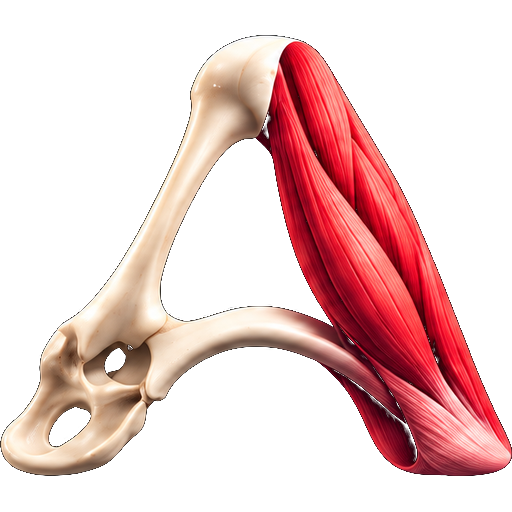
External intercostals
Mm. intercostales externi
View the external intercostals in 3DThe external intercostal muscles or external intercostals (intercostales externi) are eleven in number on both sides.
Structure
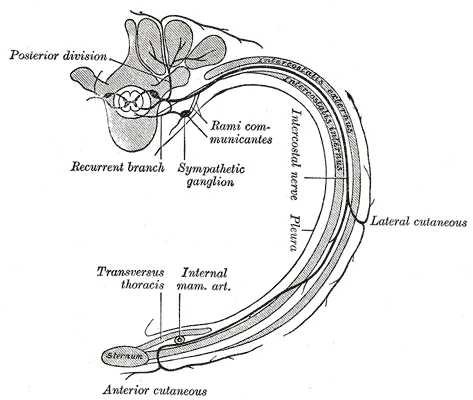
The muscles extend from the tubercles of the ribs behind, to the cartilages of the ribs in front, where they end in thin membranes, the external intercostal membranes, which are continued forward to the sternum.
These muscles work in unison when inhalation occurs. The internal intercostal muscles relax while the external muscles contract causing the expansion of the chest cavity and an influx of air into the lungs.
Each arises from the lower border of a rib, and is inserted into the upper border of the rib below. In the two lower spaces they extend to the ends of the cartilages, and in the upper two or three spaces they do not quite reach the ends of the ribs.
They are thicker than the internal intercostals, and fibers are directed obliquely downward and laterally on the back of the thorax, and downward, forward, and medially on the front.
Source: Wikipedia, The Free Encyclopedia · CC BY-SA 4.0
References
- External intercostal muscles — Wikipedia, The Free EncyclopediaText from the Wikipedia article "External intercostal muscles" (CC BY-SA 4.0); excerpted. Licence. Retrieved 2026-10-19. Revision used.
Text above is quoted from the listed sources without changes to its meaning. Image credits and licences are shown with each image. Educational information only, not medical advice.
Educational anatomy reference, not medical advice. About this content.