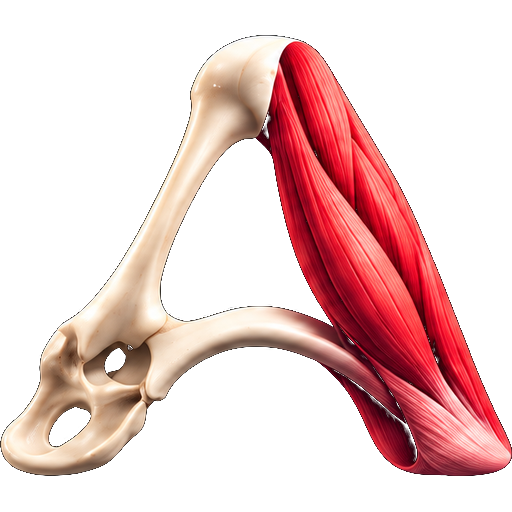
Multifidus
Mm. multifidi
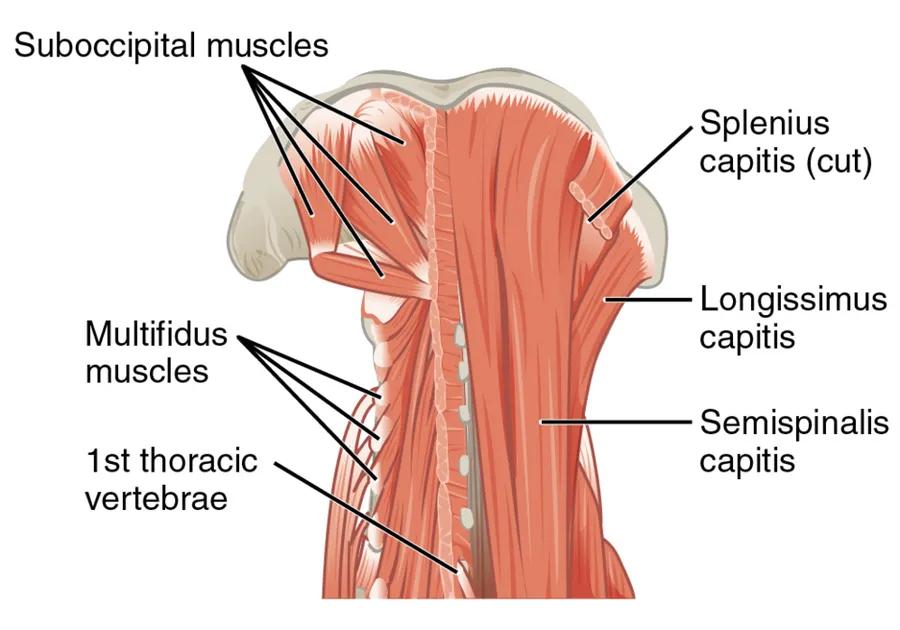
View the multifidus in 3DThe multifidus (multifidus spinae; pl.: multifidi) muscle consists of 23 muscle fasciculi, which fill up the gutter on either side of the spinous processes of the vertebrae (the so-called spino-transverse groove), from the sacrum to the axis. While very thin, the multifidus muscle plays an important role in stabilizing the joints within the spine. The multifidus is one of the transversospinalis set.
Located just superficially to the spine itself, the multifidus muscle spans three joint segments and works to stabilize these joints at each level.
The stiffness and stability makes each vertebra work more effectively, and reduces the degeneration of the joint structures caused by friction from normal physical activity.
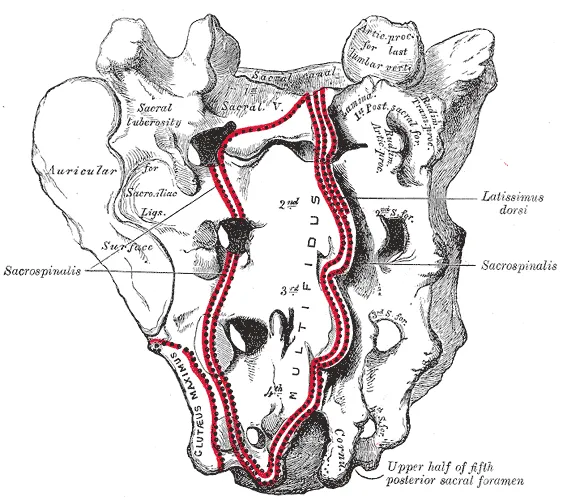
in the sacral region: from the back of the sacrum, as low as the fourth sacral foramen, from the aponeurosis of origin of the sacrospinalis, from the medial surface of the posterior superior iliac spine, and from the posterior sacroiliac ligaments.
in the lumbar region: from all the mamillary processes.
in the thoracic region: from all the transverse processes.
in the cervical region: from the articular processes of the lower four vertebrae (i.e., as far up the 4th cervical vertebra).
Each fasciculus, passing obliquely upward and medially, is inserted into the whole length of the spinous process of one of the vertebræ above.
These fasciculi vary in length: the most superficial, the longest, pass from one vertebra to the fourth above; those next in order run from one vertebra to the second or third above; while the deepest connect two adjacent vertebrae.
The multifidus lies deep relative to the spinal erectors, transverse abdominis, abdominal internal oblique muscle and abdominal external oblique muscle.
Source: Wikipedia, The Free Encyclopedia · CC BY-SA 4.0
References
- Multifidus muscle — Wikipedia, The Free EncyclopediaText from the Wikipedia article "Multifidus muscle" (CC BY-SA 4.0); excerpted. Licence. Retrieved 2026-10-19. Revision used.
Text above is quoted from the listed sources without changes to its meaning. Image credits and licences are shown with each image. Educational information only, not medical advice.
Educational anatomy reference, not medical advice. About this content.