Acute bronchitis
Also called: Chest cold
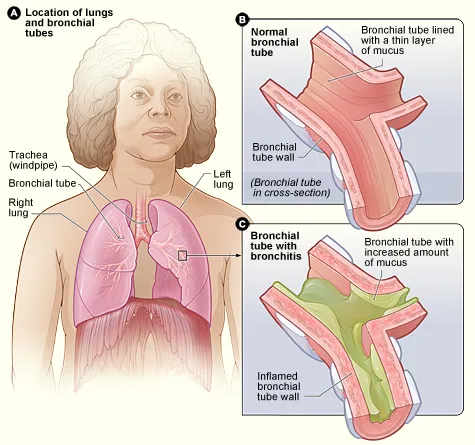
Bronchitis is an inflammation of the bronchial tubes, the airways that carry air to your lungs. It causes a cough that often brings up mucus. It can also cause shortness of breath, wheezing, a low fever, and chest tightness. There are two main types of bronchitis: acute and chronic.
Most cases of acute bronchitis get better within several days. But your cough can last for several weeks after the infection is gone.
The same viruses that cause colds and the flu often cause acute bronchitis. These viruses spread through the air when people cough, or through physical contact (for example, on unwashed hands). Being exposed to tobacco smoke, air pollution, dust, vapors, and fumes can also cause acute bronchitis. Less often, bacteria can also cause acute bronchitis.
To diagnose acute bronchitis, your health care provider will ask about your symptoms and listen to your breathing. You may also have other tests.
Treatments include rest, fluids, and aspirin (for adults) or acetaminophen to treat fever. A humidifier or steam can also help. You may need inhaled medicine to open your airways if you are wheezing. Antibiotics won't help if the cause is viral. You may get antibiotics if the cause is bacterial.
NIH: National Heart, Lung, and Blood Institute
Signs and symptoms
The primary symptom is a cough with sputum that may be purulent. The illness may also cause shortness of breath or wheezing. Upper respiratory tract infections (URTIs) often precede acute bronchitis, with overlapping symptoms including headache, nasal congestion, and sore throat. About a third of patients will experience a fever, but fevers due to acute bronchitis rarely rise above 100 °F (37.8 °C) or last longer than a few days. As fever and other systemic symptoms are less common in acute bronchitis than in pneumonia, their presence raises suspicion for the latter, especially high or persistent fevers.
Cause
Acute bronchitis can be caused by contagious pathogens, most commonly viruses. Typical viruses include respiratory syncytial virus, rhinovirus, influenza, and others. Bacteria are uncommon pathogens but may include Mycoplasma pneumoniae, Chlamydophila pneumoniae, Bordetella pertussis, Streptococcus pneumoniae, and Haemophilus influenzae.
Damage caused by irritation of the airways leads to inflammation and leads to neutrophils infiltrating the lung tissue.
Mucosal hypersecretion is promoted by a substance released by neutrophils.
Further obstruction to the airways is caused by more goblet cells in the small airways. This is typical of chronic bronchitis.
Although infection is not the reason or cause of chronic bronchitis, it is seen to aid in sustaining the bronchitis.
Diagnosis
A physical examination will often reveal decreased intensity of breath sounds, wheezing, rhonchi, and prolonged expiration. During examination, physicians rely on history and the presence of persistent or acute onset of cough, followed by a URTI with no traces of pneumonia. Acute bronchitis is typically a clinical diagnosis that relies on patients history and exam, and should be suspected in patients with an acute onset of cough, which often follows a URTI without traces of pneumonia.
Although there is no universally-accepted clinical definition for acute bronchitis, there is a proposed set of practical criteria (Macfarlane, 2001) that include:
An acute illness of less than three weeks.
At least one other lower respiratory tract symptom, such as sputum production, wheezing, chest pain.
No alternative explanation for the symptoms.
A variety of tests may be performed in people presenting with cough and shortness of breath:
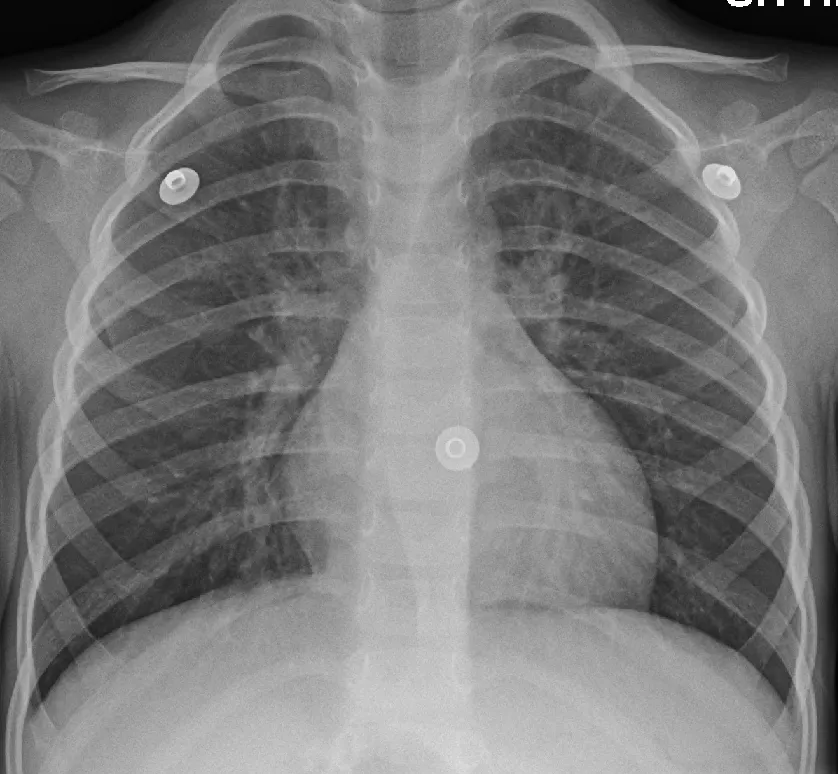
A chest X-ray is useful to exclude pneumonia which is more common in those with a fever, fast heart rate, fast respiratory rate, or who are old.
A sputum sample showing neutrophil granulocytes (inflammatory white blood cells) and culture showing that has pathogenic microorganisms such as Streptococcus species.
A blood test would indicate inflammation (as indicated by a raised white blood cell count and elevated C-reactive protein).
Decreased breath sounds, crackles, wheezing, and rhonchi that clears with coughs may be heard in the chest. Dullness to percussion and pleural rub suggest disease extension beyond the bronchi such as seen with pneumonia. Paroxysms of cough followed by inspiratory whoop and vomiting suggests pertussis.
Prevention
Approaches to prevent acute bronchitis include smoking cessation and avoiding lung irritants. Frequent hand washing may also be protective. An oral whole cell nontypeable Haemophilus influenzae vaccine given in the fall has demonstrated short term effectiveness in reducing the frequency and severity of the disease during the winter.
Treatment
Most cases are self-limited and resolve themselves in a few weeks.
Pain medications may help with symptoms. Other recommendations may include rest and keeping well hydrated.
Antibiotics
Evidence does not support the general use of antibiotics in acute bronchitis. A systematic review found antibiotics reduced cough by an average of 12 hours (out of a total average of about 14–28 days). Antibiotics caused more side effects such as nausea and diarrhoea, and also may promote antibiotic-resistant bacteria. It is possible they are useful in susceptible groups such as the frail and elderly but there was not enough research information to determine this.
Referring to acute bronchitis by benign-sounding terms such as "chest cold" or "viral infection" may reduce antibiotic usage by improving patient satisfaction when antibiotics are not prescribed.
Smoking cessation
To help the bronchial tree heal faster and not make bronchitis worse, smokers should quit smoking completely.
Alternative therapeutic approaches
Salbutamol is not effective in children with an acute cough who do not have restricted airways. There is weak evidence that salbutamol may be useful in adults with wheezing due to a restricted airway; however, it may result in nervousness, shakiness or a tremor.
Prognosis
Acute bronchitis usually lasts a few days or weeks. It may accompany or closely follow a cold or the flu, or may occur on its own. Bronchitis usually begins with a dry cough, including waking the patient at night. After a few days, it progresses to a wetter or productive cough, which may be accompanied by fever, fatigue, and headache. The fever, fatigue, and malaise may last only a few days, but the wet cough may last up to several weeks. A persistent fever greater than 100°F (37.8°C) should suggest consideration of influenza or pneumonia.
Epidemiology
Acute bronchitis is one of the most common diseases. About 5% of adults are affected and about 6% of children have at least one episode a year. It occurs more often in the winter.
In infants under one year of age, acute bronchitis was the most common reason for admission to the hospital after an emergency department visit in the US in 2011.
Source: Wikipedia, The Free Encyclopedia · CC BY-SA 4.0
References
- Acute Bronchitis — MedlinePlus, U.S. National Library of MedicineSource: MedlinePlus, National Library of Medicine Public domain (U.S. government work). Retrieved 2026-10-19.
- Acute bronchitis — Wikipedia, The Free EncyclopediaText from the Wikipedia article "Acute bronchitis" (CC BY-SA 4.0); excerpted. Licence. Retrieved 2026-10-19. Revision used.
Text above is quoted from the listed sources without changes to its meaning. Image credits and licences are shown with each image. Educational information only, not medical advice.
Related conditions
Educational overview, not medical advice. Treatment varies by person and location. Consult a qualified health professional for diagnosis or care. Content and model notes · Privacy information