Autism spectrum disorder
Also called: Autism, ASD
Autism spectrum disorder (ASD) is a neurological and developmental disorder that begins early in childhood and lasts throughout a person's life. It affects how a person acts and interacts with others, communicates, and learns. It includes what used to be known as Asperger syndrome and pervasive developmental disorders.
It is called a "spectrum" disorder because people with ASD can have a range of symptoms. People with ASD might have problems talking with you, or they might not look you in the eye when you talk to them. They may also have restricted interests and repetitive behaviors. They may spend a lot of time putting things in order, or they may say the same sentence again and again. They may often seem to be in their "own world."
At well-child checkups, the health care provider should check your child's development. If there are signs of ASD, your child will have a comprehensive evaluation. It may include a team of specialists, doing various tests and evaluations to make a diagnosis.
The causes of ASD are not known. Research suggests that both genes and environment play important roles.
There is currently no one standard treatment for ASD. There are many ways to increase your child's ability to grow and learn new skills. Starting them early can lead to better results. Treatments include behavior and communication therapies, skills training, and medicines to control symptoms.
NIH: National Institute of Child Health and Human Development
Causes
The exact causes of autism are unknown, with genetics likely being the largest contributing factor. It was long presumed a single cause at the genetic, cognitive, and neural levels underpinned the social and non-social features, but autism is increasingly thought to be a complex condition with distinct, often co-occurring, causes for its core aspects. It is unlikely that autism has a single cause; research has identified many factors as potential contributors, including genetics, prenatal and perinatal (shortly after birth) history, neuroanatomical anomalies, changing social demands in the workplace or in school, and environmental influences. Changing social demands in education and the workplace may also exacerbate adaptive difficulties, leading to higher rates of diagnosis. It is possible to identify general factors but difficult to determine specific ones. Research into causes is complex due to challenges in identifying distinct biological subgroups in the autistic population.
Genetics
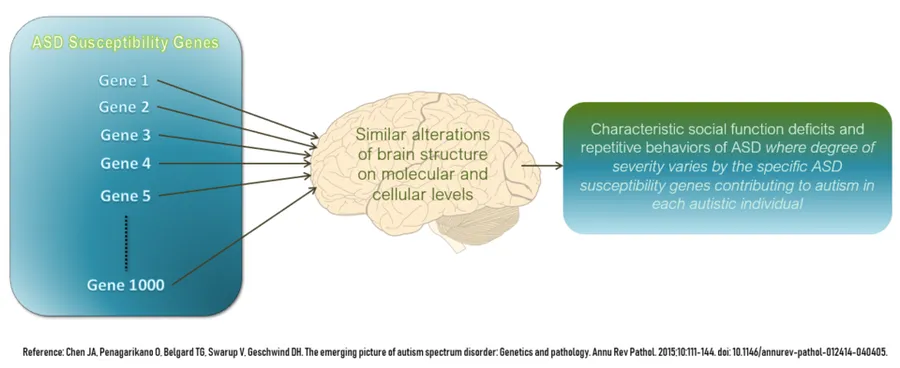
Autism has a strong genetic basis, but the genetics of autism are complex and it is unclear whether autism is explained more by rare mutations with major effects or by rare multi-gene interactions of common genetic variants. Twin studies indicate that autism is highly heritable, with genetic factors explaining most of the risk and shared environmental effects playing a minor role. Numerous genes have been found to be associated with autism, with most loci individually explaining less than 1% of autism cases and having only small effects. While these genetic variants are associated with a higher likelihood of being autistic, they do not individually determine whether someone will be autistic. Complexity arises from interactions among multiple genes, the environment, and heritable epigenetic factors (which influence gene expression without changing DNA sequence).
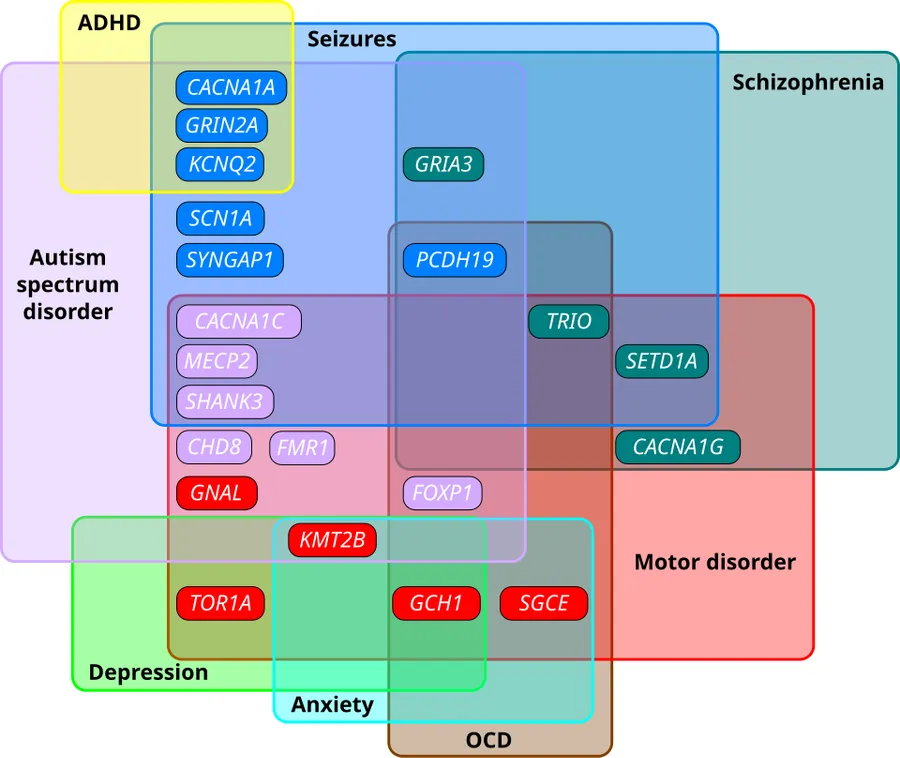
Typically, autism is not traceable to a single-gene (Mendelian) mutation or chromosome anomaly, and no known genetic syndrome selectively causes autism. If autism is one characteristic of a broader medical condition, such as fragile X syndrome, it is called syndromic autism, as opposed to non-syndromic or idiopathic autism, which is typically polygenic without a known cause. Syndromic autism is present in approximately 25% of autistic people. Research has suggested that autistic people with intellectual disability tend to have rarer, more impactful, genetic mutations than those found in people diagnosed solely with autism. A number of genetic syndromes causing intellectual disability may also co-occur with autism, including fragile X, Down, Prader–Willi, Angelman, Williams syndrome, and SYNGAP1-related intellectual disability.
Research suggests that autism is associated with genes that influence neural development and connectivity. These are involved in key neuronal processes such as protein synthesis, synaptic activity, cell adhesion, and the formation and remodeling of synapses, as well as the regulation of excitatory and inhibitory neurotransmission. Studies have identified lower expression of genes linked to the inhibitory neurotransmitter gamma-aminobutyric acid, alongside higher expression of genes associated with glial (e.g., astrocytes) and immune (e.g., microglia) cells, correlating with higher numbers of these cells in post-mortem brain tissue. Genes associated with variation in the mTOR signaling pathway, which is involved in cell growth and survival, are also under investigation. Some hypotheses in evolutionary psychiatry suggest that autism-associated genes may persist because of proposed links to traits such as intelligence, systematizing abilities, or innovation.
If parents have one autistic child, the chance of having a second autistic child ranges from 7% to 20%. Though autism is highly heritable, many autistic people have only non-autistic family members. In some cases, this may be explained by de novo structural variations—such as deletions, duplications, or inversions—that arise spontaneously during meiosis and are not present in the parents' genomes. The likelihood of being autistic is greater with older fathers than with older mothers; two potential explanations are the known increase in the number of mutations in older sperm and the hypothesis that men marry later if they carry a genetic predisposition and show some signs of autism.
Evolutionary perspectives
Research on the evolutionary advantages of autism and associated genes has suggested that autistic people may have contributed uniquely to human development, particularly in technological innovation (such as tool-making) and in detailed observation and analysis of the natural environment. Systematic reviews emphasize that these ideas remain speculative and that no single evolutionary explanation has been established.
Neurocognitive theories
Various theoretical frameworks attempt to integrate underlying genetic and environmental causes with observed neurobiological findings and behavioral traits.
The Intense World Theory proposes that a higher neural responsiveness in autism leads to more intense sensory perception, attention, memory, and emotional responses, shaping the person's experience.
The Enhanced Perceptual Functioning model of autism posits that superior and more independent functioning of auditory and visual perception is the root cause of the specific pattern of cognitive, behavioral, and neural performance observed in autistic people. The model asserts the importance of perception, arguing it is more central to the autistic phenotype than social or higher-order cognitive processes.
Beyond models of causation and brain function, cognitive theories have been developed to explain patterns of information processing common in autistic people, to better understand the autistic phenotype. While these cognitive accounts describe how autistic traits may manifest, they are generally viewed as explanations of the behavioral and cognitive consequences of the underlying neurobiological development rather than primary causes themselves.
The weak central coherence theory suggests a tendency to focus on details over broader context.
The empathising–systemising theory posits that autistic people have distinct cognitive styles related to analyzing systems versus empathizing with others.
Early life and prenatal or perinatal factors
Certain factors during pregnancy and birth may increase the likelihood of autism, although no single factor is conclusive and study results are often inconsistent. These factors include advanced parental age, maternal health conditions (e.g., gestational diabetes, infections such as rubella, inflammation), exposure to certain medications, and some environmental exposures like significant air pollution during pregnancy. While many environmental factors have been investigated, few have established links, and some prominent claims (e.g., vaccines or parenting styles) have been disproven.
Disproven refrigerator mother hypothesis
Work on autism in the mid-20th century proposed the "frigid mother" or refrigerator mother hypothesis, according to which poor parenting or lack of emotional support from parents leads to autism. When it was proposed, the hypothesis contributed to considerable media attention about autism, which had previously been mostly ignored. The hypothesis has since fallen out of favor, and has not garnered support when studied. But the blame placed on parents of children on the autism spectrum, especially mothers, has contributed to substantial stigma.
Early social experiences, such as caregiver interactions or deprivation, may shape the development of autism, potentially via gene–environment correlations, and are distinct from the discredited refrigerator mother hypothesis.
Disproven vaccines hypothesis
Parents may first become aware of autistic characteristics in their child around the time of a routine vaccination. This has led to theories – subsequently disproven – blaming vaccine "overload", the vaccine preservative thiomersal, or the MMR vaccine for causing autism. In 1998, British physician Andrew Wakefield led a fraudulent, litigation-funded study that suggested that the MMR vaccine may cause autism. His co-authors have since recanted the claims made in the study. Wakefield was struck off the British medical register for "serious professional misconduct" after determination that his involvement in the study amounted to fraud, leading to the loss of his right to practice medicine.
Two versions of the vaccine causation hypothesis were that autism results from brain damage caused by either the MMR vaccine itself, or by mercury used as a vaccine preservative. No convincing scientific evidence supports these claims. They are biologically implausible, and further evidence continues to refute them, including the observation that the rate of autism continues to climb despite elimination of thimerosal from most routine vaccines given to children from birth to 6 years of age.
A 2014 meta-analysis examined ten major studies on autism and vaccines involving 1.25 million children worldwide; it concluded that neither the vaccine preservative thimerosal (mercury), nor the MMR vaccine, which has never contained thimerosal, lead to autism. Despite this, misplaced parental concern has led to lower rates of childhood immunizations, outbreaks of previously controlled childhood diseases in some countries, and the preventable deaths of several children.
In 2005, Sanofi Pasteur's Tripedia DTaP vaccine automatically included autism on a long list of "adverse events" due to unverified reports by consumers, although such reports did not "establish a causal relationship" to the vaccine at any point. Anti-vaccine activists have spread false claims about the absence of autism in North America's Amish population due to lower vaccination rates. A 2010 study revealed that autism is present in 1 out of every 271 Amish children.
Classification
The DSM-5 and ICD-11 are the two main frameworks for classification of mental disorders in use today. Autism spectrum disorder is classified in both as a neurodevelopmental disorder, with its definition encompassing a spectrum of highly varied presentations. The spectrum concept signals diversity rather than a simple range from mild to severe. Before the DSM-5 (2013) and ICD-11/ICD-11 CDDR (2019/2024), autism fell within a broader pervasive developmental disorder category that included labels such as Asperger syndrome and classic autism (also called childhood autism or Kanner syndrome). Because these diagnoses overlapped, the manuals unified them under "autism spectrum disorder" (ASD).
Since 1980, the committees behind both manuals have aimed for greater convergence, incorporating biological research while keeping behavior-based criteria. ICD-11 instead records whether the person has co-occurring intellectual disability or language impairment.
Some researchers have questioned whether existing criteria capture the full phenomenon, prompting proposals for prototype descriptions, transdiagnostic biological markers, or distinctions between common behavioral traits and rarer genetic or environmental factors. Others have proposed alternatives to the disorder-focused spectrum model that deconstruct autism into separate phenomena: a non-pathological spectrum of behavioral traits in the general population, and rare genetic mutations or environmental factors influencing neurodevelopmental and psychological conditions.
DSM
The American Psychiatric Association's Diagnostic and Statistical Manual of Mental Disorders, Fifth Edition, Text Revision (DSM-5-TR), released in 2022, is the latest version. Its fifth edition—DSM-5, released in 2013—was the first to define ASD as a single diagnosis, combining the previously distinct diagnoses of classic autism, Asperger syndrome, childhood disintegrative disorder, and pervasive developmental disorder not otherwise specified (PDD-NOS). This is still the case in the DSM-5-TR.
The DSM-5 and DSM-5-TR adopt a dimensional approach, with one diagnostic category for disorders that fall under the autism spectrum umbrella. Within that category, the DSM-5 has a framework that differentiates individuals by dimensions of symptom severity and by associated features (i.e., the presence of other conditions or factors that may contribute to the symptoms, other neurodevelopmental or mental conditions, intellectual disability, or language impairment). The two core symptom domains are (a) social communication and (b) restricted, repetitive behaviors. Clinicians may specify separate severity levels for each domain based on the degree to which symptoms affect daily functioning, rather than providing a single overall severity rating.
Before the fifth edition, the DSM separated social deficits and communication deficits into two domains. The DSM-5 also revised the onset criteria to specify that symptoms appear in the early developmental period, noting that symptoms may manifest later when social demands exceed capabilities; the previous edition had required onset before age three. These revisions remain in the DSM-5-TR.
ICD
The World Health Organization's International Classification of Diseases (11th revision), ICD-11, was released in 2018 and came into full effect in 2022. Its classification of autism spectrum disorder (6A02) is based on whether intellectual impairment is present as well as the level, if any, of language impairment, as follows:
Management
There is no cure for autism. From the perspective of neurodiversity, "curing" or otherwise treating autism may not be an appropriate goal.
Interventions targeting specific challenges or co-occurring conditions associated with autism are widely regarded as important. Perspectives on the goals of these interventions vary: the medical model of disability often focuses on addressing core characteristics such as social communication difficulties and restricted/repetitive behaviors. The neurodiversity movement supports interventions aimed at enhancing functional communication (spoken or non-spoken), managing related issues like anxiety or inertia, or addressing behaviors considered harmful, rather than seeking to alter core autistic features.
Studies of interventions have methodological problems that prevent definitive conclusions about efficacy, but the development of evidence-based interventions has advanced. Several therapies can help autistic children, and they are typically tailored to the child's needs. The main goals of therapy are to lessen associated difficulties and family distress, and to increase quality of life and functional independence. In general, higher IQs correlate with higher responsiveness to interventions and larger intervention outcomes. Behavioral, psychological, educational, and skill-building interventions may be used to help autistic people learn skills for living independently, as well as other social, communication, and language skills. Therapy also aims to reduce behaviors perceived as inappropriate and to build upon strengths. Medications have not been found to reduce autism's core features, but may be used for associated difficulties, such as irritability or inattention.
Non-pharmacological interventions
Certain interventions, such as intensive, sustained special education, remedial education programs, and behavior therapy, are considered beneficial early in life for autistic children to acquire self-care, social, and job skills. Available approaches include applied behavior analysis, developmental models, structured teaching, speech and language therapy, cognitive behavioral therapy, social skills therapy, and occupational therapy. These interventions may either target autistic features comprehensively or focus on a specific area of difficulty. Recent research further suggests that mindfulness-based stress reduction can reduce behavioral difficulties, alleviate psychological distress, and enhance cognitive and social functioning in people with autism, while also significantly reducing their caregivers' stress, anxiety, and depression.
Applied behavior analysis
Applied behavior analysis (ABA) is a behavioral therapy that aims to teach autistic children social and other behaviors by prompting and rewarding desired responses, a technique known as positive reinforcement. This may include learning fine and gross motor and language skills through play, expressive labeling, and requesting. It also seeks to reduce aggressive and self-injurious behavior by assessing its environmental causes and reinforcing replacement behaviors. Early, intensive ABA therapy has been claimed to demonstrate effectiveness in enhancing preschool children's language skills, adaptive functioning, and intellectual performance. Another review reported a lack of adverse event monitoring, although such adverse effects may be common.
Interventions for early childhood may be based on different theoretical frameworks, such as ABA (with its structured and naturalistic approaches) and Developmental Social Pragmatic (DSP) models. Research suggests that children who already understand more spoken language (receptive language) tend to make progress with fewer hours of a flexible, play-based style of ABA—as few as 2.5 to 20 hours per week. Children who understand less spoken language tend to undergo more repetitive, structured style called discrete trial training, delivered more intensively (around 25 hours per week), to make similar progress.
ABA has faced criticism. Sandoval-Norton et al. describe it as unethical and argue that it has unintended consequences, such as prompt dependency, susceptibility to psychological abuse, and overemphasis on compliance, which can create challenges in the transition to adulthood. Increasingly, ABA is also criticized for trying to reduce or eliminate autistic behaviors to make children appear less autistic, rather than respecting neurodiversity. A problem with unreported conflicts of interest in ABA research has been described, with potential effects on the quality of evidence. In response, some ABA advocates suggest that instead of discontinuing the therapy, efforts should focus on increasing protections and ethical compliance.
A related type of intervention is parent training models. These teach parents to implement various ABA and DSP techniques themselves. Several parent-mediated behavioral therapies target social communication difficulties, while their effect on restricted and repetitive behaviors (RRBs) is uncertain. Similarly, teacher-implemented interventions that combine naturalistic ABA with a developmental social pragmatic approach have been associated with effects on young children's social-communication behaviors, although there is limited evidence regarding effects on broader autistic characteristics.
Inclusion in education and the workplace
Inclusive education models strive to support autistic students in mainstream educational settings, moving away from segregated special education environments toward participation alongside their peers. Despite these efforts, autistic students can face significant barriers, sometimes leading to trauma or emotionally-based school non-attendance. This avoidance is often rooted in overwhelming sensory environments, social anxiety, communication breakdowns, bullying, or lack of adequate support and understanding, rather than defiance.
Central to successful inclusion is the application of frameworks like Universal Design for Learning (UDL), which proactively designs curricula and learning environments to be accessible and engaging for all students, including those who are autistic. UDL principles accommodate varied learning styles, sensory sensitivities, and communication preferences often present in autistic people.
The SPACE framework (sensory, predictability, acceptance, communication, empathy) developed by Doherty et al., primarily for healthcare settings, offers a lens for identifying and addressing common environmental barriers that can contribute to distress and avoidance behaviors for autistic people. Accommodations may include providing quiet spaces as a retreat for people feeling overwhelmed. Autistic students may also need help initiating and maintaining social relationships with their peers if they wish to do so. Especially in higher education, some autistic students may need help with executive functioning, e.g., managing their own work, and the ability to initiate and complete tasks.
Transitioning to adulthood, autistic people often encounter substantial barriers to securing and maintaining meaningful employment, leading to high rates of unemployment and underemployment compared to the general population. Challenges can include navigating traditional interview processes, difficulties with unspoken social rules in the workplace, sensory sensitivities to office environments (e.g., lighting, noise), and needs for clear, direct communication and structured tasks. Effective workplace inclusion involves implementing reasonable adjustments such as flexible working hours or locations, providing noise-canceling headphones, staff training, and mentorship programs. Working from home can help to avoid overwhelming sensory or social situations, even if this means losing desirable social contact. Autism-friendly workplaces not only allow autistic employees to utilize their unique skills and perspectives but also benefit employers through increased innovation, problem-solving capabilities, and employee loyalty.
Pharmacological interventions
Autistic people may be prescribed medication to manage specific co-occurring conditions or behaviors, such as ADHD, anxiety, aggression, or self-injurious behaviors, particularly when non-pharmacological interventions alone have been insufficient. Medications are not routinely recommended for autism's core features, such as social and communication difficulties or restricted and repetitive behaviors.
More than half of autistic children in the United States are prescribed psychoactive drugs or anticonvulsants. Commonly used drug classes include antidepressants, stimulants, and antipsychotics. Among antipsychotics, risperidone and aripiprazole are the only medications approved by the U.S. Food and Drug Administration specifically for reducing irritability, aggression, and self-injurious behaviors in autistic people. These drugs can have significant side effects and responses to them may vary. The UK's National Health Service cautions against the overprescription of antipsychotics and recommends their use only for specific indications, at the lowest effective dose and for the shortest duration necessary.
Some research suggests that risperidone and aripiprazole may also reduce restricted and repetitive behaviors, such as hand-flapping or body-rocking. The evidence supporting this use has limitations, including study size and scope, alongside concerns about adverse effects. A meta-analysis found no significant efficacy of these antipsychotics or SSRI antidepressants in reducing these behaviors. Stimulant medications like methylphenidate may reduce inattention or hyperactivity in some autistic children, particularly when ADHD is also present. But methylphenidate's efficacy is lower in autistic people with ADHD compared to non-autistic people with ADHD, and side effects are more common.
Alternative medicine
Alternative therapies have been researched and implemented, and many have resulted in harm to autistic people. For example, chelation therapy is not recommended as a treatment for autism, with risks outweighing potential benefits. Reports of death from botched chelation therapy as treatment for autism have been documented. Medical authorities have condemned bleach-based approaches, such as chlorine dioxide solutions marketed as Miracle Mineral Solution, as dangerous and ineffective. The British NHS also warns against CEASE therapy, which rejects vaccinations and recommends potentially harmful amounts of dietary supplements. There is also no evidence for the efficacy of hyperbaric oxygen therapy and its use is not recommended.
Although sometimes used for autistic people, no reliable evidence indicates a gluten- and casein-free diet as a standard intervention. Autistic children's preference for unconventional foods as well as gastrointestinal problems and lack of exercise can lead to reduction in bone cortical thickness, and this risk is greater in those on casein-free diets, as a consequence of the low intake of calcium and vitamin D.
Emerging evidence-based interventions
Interventions for autistic adults have limited evidence; cognitive behavioral approaches and mindfulness are considered promising. Music therapy for autistic people likely improves overall autism severity, global functioning, and quality of life, but evidence is unclear for social and communication skills. Animal-assisted activities and therapies show promise in improving social communication, irritability, hyperactivity, and word usage in autistic people.
Caregivers
Families who care for an autistic child often experience greater stress. Parents often face substantial barriers when seeking an autism diagnosis and appropriate care for their child, including long waits, financial strain, and inconsistent guidance from healthcare providers. Affiliate stigma can also reduce quality of life, where negative attitudes toward the autistic child are extended to those close to them. Family members who are themselves autistic may be better able to understand the autistic child.
Prognosis
The prognosis after diagnosis of autism in childhood is poorly understood. Some core diagnostic symptoms, including restricted and repetitive behaviors, are stable, but some gradual symptom changes occur. Among children diagnosed before age 6, about 9 in 10 continue to meet diagnostic criteria one year later. Some report that those with limited support needs are likely to have lessened autistic features over time, while others argue that this perception is likely due to masking—hiding autistic characteristics to avoid stigma. Long-term outcomes vary, in part due to variability in presentation between individuals and across affected domains. Autistic adults are more likely to be unemployed and have greater mental health service needs than the general population. About 85% of autistic people need support with independent living in adulthood. Factors such as developing spoken language before age six, having an IQ above 50, and possessing marketable skills are associated with higher likelihood of independent living in adulthood. Mortality among autistic people is approximately twice that of the general population, particularly among those with co-occurring neurologic or psychiatric disorders.
Suicide
Risk factors for self-harm and suicidality include circumstances that could affect anyone but are more common among autistic people, such as mental health problems (e.g., anxiety disorder) and social problems (e.g., unemployment and social isolation). In addition, there are autism-specific factors, such as exhausting attempts to behave like a non-autistic person to avoid stigma and negative reactions of society towards autistic people (masking). Autistic people are also at significantly increased risk of victimization, including bullying, sexual assault, and other forms of criminal abuse. A 2019 meta-analysis found autistic people to be four times more likely to have depression than non-autistic people.
Rates of suicidality vary significantly depending upon what is being measured. This is partly because questionnaires developed for non-autistic subjects are not always valid for autistic people. As of 2023, the Suicidal Behaviours Questionnaire–Autism Spectrum Conditions (SBQ-ASC) is the only test validated for autistic people. According to some estimates, about a quarter of autistic youth and a third of all autistic people have experienced suicidal ideation at some point. Autistic people are about three times as likely as non-autistic people to make a suicide attempt. Almost 10% of autistic youth and 15% to 25% of autistic adults have attempted suicide. Rates of suicide attempts and suicidal ideation are the same for people formally diagnosed with autism and people who have typical intelligence and are believed to be autistic but have not been diagnosed. The suicide risk is higher for autistic people who are not cisgender males and do not have intellectual disabilities.
Epidemiology
Most professionals believe that race, ethnicity, and socioeconomic background have limited effect on the occurrence of autism.
A 2011 study presented at the Cognitive Science Society's annual meeting reported that autistic participants were more likely to be non-theistic or non-religious than non-autistic participants.
Co-occurring conditions
Several conditions can co-occur with autism at a higher rate than in the rest of the population. This may be referred to as comorbidity, and may increase with age, causing difficulties for youth on the autism spectrum, and can make interventions and therapies more challenging. Features of autism and other diagnoses often overlap, and autism's characteristics can make traditional diagnostic procedures more difficult. This is sometimes known as diagnostic overshadowing. Common co-occurring conditions are:
ADHD is seen in between 25% to 32% of autistic people. Characteristics similar to those of ADHD can be part of an autism diagnosis.
Epilepsy occurs in about 10% of autistic people. The risk is higher for older autistic people and those with intellectual disability.
Intellectual disabilities are some of the most common co-occurring conditions with autism (30% to 40%). As autism diagnosis is increasingly given to people with lower support needs, there is a tendency for the proportion with co-occurring intellectual disability to decrease over time.
Various anxiety disorders can co-occur with autism, with overall co-occurring rates of 17% to 23%. Many anxiety disorders have characteristics better explained by autism itself, or are hard to distinguish from autism's features.
Rates of co-occurring depression in autistic people range from 9% to 13%.
Obsessive–compulsive disorder (OCD) occurs in 7% to 10% of autistic people.
Starting in adolescence, some autistic people fall under the criteria for the similar-looking schizoid personality disorder, which is characterized by a lack of interest in social relationships, a tendency toward a solitary or sheltered lifestyle, secretiveness, emotional coldness, detachment, and apathy.
Genetic conditions: About 10% of autistic people are diagnosed with a rare genetic syndrome such as Prader–Willi, Angelman, Fragile X, or 16p11.2 deletion syndrome.
Gastrointestinal problems are among the most commonly reported co-occurring medical conditions in autistic people, and occur at higher rates than in the general population. Frequently reported issues include chronic constipation, diarrhea, abdominal pain, gastroesophageal reflux, and functional gastrointestinal disorders. Gastrointestinal symptoms in autistic people have been associated with increased irritability, distress, sleep disturbances, and challenges in communication, particularly in children who have limited spoken language. The underlying mechanisms are not fully understood and are likely multifactorial, involving interactions between diet, gut motility, sensory sensitivities, stress responses, and the gut-brain axis.
Sleep problems affect about two-thirds of autistic people at some point in childhood. These most commonly include symptoms of insomnia, such as difficulty falling asleep, frequent nocturnal awakenings, and early-morning awakenings. Sleep problems are associated with difficult behaviors and family stress, and are often a focus of clinical attention over and above the autism diagnosis.
Motor difficulties, including features of dyspraxia, are highly prevalent in autistic people, and there is a significantly higher rate of joint hypermobility/hypermobility spectrum disorders/Ehlers–Danlos syndrome in autistic people.
There is tentative evidence that gender dysphoria occurs more frequently in autistic people.
Prevalence
The World Health Organization notes that reports on prevalence vary widely. It estimates that about 1 in 127 children were autistic between 2012 and 2021 with a trend of increasing prevalence over time. This may reflect an underestimate of prevalence in low- and middle-income countries. Surveillance studies in community samples of adults suggest a similar share of the adult population would meet diagnostic criteria if formally assessed. The number of people diagnosed has increased since the 1990s, likely due to a combination of increased recognition of autism, better availability of diagnosis, and changes to the diagnostic criteria. The increase in autism is largely attributable to changes in diagnostic practices, referral patterns, availability of services, age at diagnosis, and public awareness, particularly among women, though other unidentified environmental factors may exist.
The Centers for Disease Control's Autism and Developmental Disabilities Monitoring Network reported that approximately 1 in 31 children in the United States is diagnosed with autism, based on data collected in 2022. For 2016 data, the estimate was 1 in 54, compared to 1 in 68 in 2010 and 1 in 150 in 2000. Diagnostic criteria for autism have changed significantly since the 1980s; for example, U.S. special-education autism classification was introduced in 1994.
Sex ratio
Males are about three times more likely to be diagnosed with autism than females. Several theories about the higher prevalence in males have been investigated. Prevalence differences may be mainly due to a result of differences in expression of characteristics between males and females, with autistic women and girls showing less atypical behaviors and therefore being less likely to be diagnosed with autism.
Sexuality and gender identity
The common belief that most autistic people are not interested in sexual or romantic relationships, which largely formed due to older studies with poor methodology, has been refuted by more recent studies. However, both autistic men and autistic women are more likely to be asexual than their non-autistic counterparts.
Research indicates that autistic people are significantly more likely to be LGBTQ than the general population. More specifically, studies show they are less likely to be heterosexual and more likely to be transgender or gender-nonconforming, with gender dysphoria also being more common. One study from 2018 found about 70% of its autistic participants identified as non-heterosexual compared to only about 30% of the non-autistic group. The range of sexual orientations among autistic people has also been found to be more diverse than among non-autistic people.
Source: Wikipedia, The Free Encyclopedia · CC BY-SA 4.0
References
- Autism Spectrum Disorder — MedlinePlus, U.S. National Library of MedicineSource: MedlinePlus, National Library of Medicine Public domain (U.S. government work). Retrieved 2026-10-19.
- Autism — Wikipedia, The Free EncyclopediaText from the Wikipedia article "Autism" (CC BY-SA 4.0); excerpted. Licence. Retrieved 2026-10-19. Revision used.
Text above is quoted from the listed sources without changes to its meaning. Image credits and licences are shown with each image. Educational information only, not medical advice.
Related conditions
Educational overview, not medical advice. Treatment varies by person and location. Consult a qualified health professional for diagnosis or care. Content and model notes · Privacy information
Social factors
Social factors such as upbringing are not known to cause autism, but it is possible that increasing demands for flexibility and social interaction in education, or in one's personal and professional life, may cause people to exhibit pronounced difficulties that would not have led to diagnosis in a different setting.
A 2010 study of California health records found that children living near another child recently diagnosed with autism were more likely to also be diagnosed, an effect the authors attributed to social diffusion of information about autism rather than a true rise in underlying prevalence; they estimated this accounted for about 16% of the increase in diagnosed prevalence between 2000 and 2005.