Crohn's disease
Also called: Inflammatory bowel disease, IBD
What is Crohn's disease?
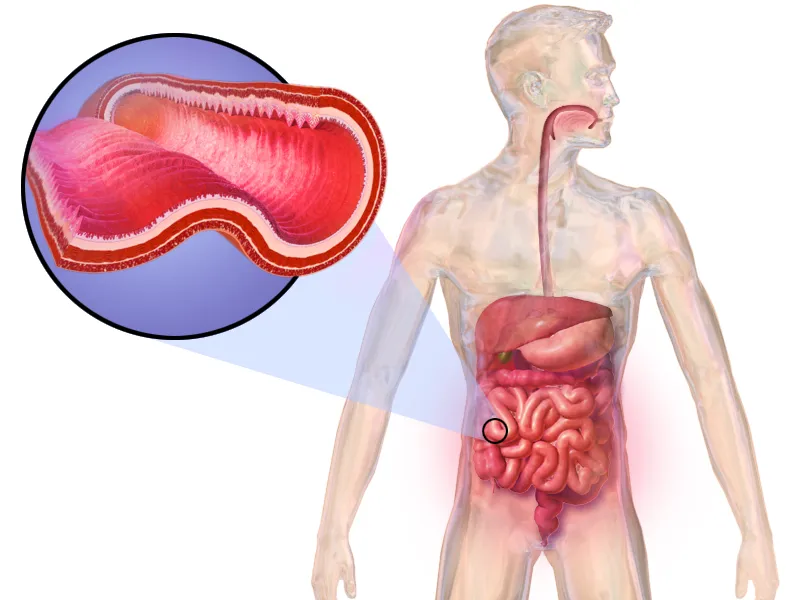
Crohn's disease is a chronic (long-lasting) disease that causes inflammation in your digestive tract. It can affect any part of your digestive tract, which runs from your mouth to your anus. But it usually affects your small intestine and the beginning of your large intestine.
Crohn's disease is an inflammatory bowel disease (IBD). Ulcerative colitis and microscopic colitis are other common types of IBD.
What causes Crohn's disease?
The cause of Crohn's disease is unknown. Researchers think that an autoimmune reaction may be one cause. An autoimmune reaction happens when your immune system attacks healthy cells in your body. Genetics may also play a role, since Crohn's disease can run in families.
Stress and eating certain foods don't cause the disease, but they can make your symptoms worse.
Who is more likely to develop Crohn's disease?
There are certain factors that may raise your risk of Crohn's disease:
- Family history of the disease. Having a parent, child, or sibling with the disease puts you at higher risk.
- Smoking. This may double your risk of developing Crohn's disease.
- Certain medicines, such as antibiotics, birth-control pills, and nonsteroidal anti-inflammatory drugs (NSAIDs) such as aspirin or ibuprofen. These may slightly increase your chance of developing Crohn's.
- A high-fat diet. This may also slightly increase your risk of Crohn's.
What are the symptoms of Crohn's disease?
The symptoms of Crohn's disease can vary, depending where and how severe your inflammation is. The most common symptoms include:
- Diarrhea
- Cramping and pain in your abdomen
- Weight loss
Some other possible symptoms are:
- Anemia, a condition in which you have fewer red blood cells than normal
- Eye redness or pain
- Fatigue
- Fever
- Joint pain or soreness
- Nausea or loss of appetite
- Skin changes that involve red, tender bumps under the skin
Stress and eating certain foods such as carbonated (fizzy) drinks and high-fiber foods may make some people's symptoms worse.
What other problems can Crohn's disease cause?
Crohn's disease can cause other problems, including:
- Intestinal obstruction, a blockage in the intestine
- Fistulas, abnormal connections between two parts inside of the body
- Abscesses, pus-filled pockets of infection
- Anal fissures, small tears in your anus that may cause itching, pain, or bleeding
- Ulcers, open sores in your mouth, intestines, anus, or perineum
- Malnutrition, when your body does not get the right amount of vitamins, minerals, and nutrients it needs
- Inflammation in other areas of your body, such as your joints, eyes, and skin
How is Crohn's disease diagnosed?
Your health care provider may use many tools to make a diagnosis:
- A medical history, which includes asking about your symptoms
- A family history
- A physical exam, including:
- Checking for bloating in your abdomen.
- Listening to sounds within your abdomen using a stethoscope.
- Tapping on your abdomen to check for tenderness and pain and to see if your liver or spleen is abnormal or enlarged.
- Various tests, including:
- Blood and stool tests.
- A colonoscopy.
- An upper GI endoscopy, a procedure in which your provider uses a scope to look inside your mouth, esophagus, stomach, and small intestine.
- Diagnostic imaging tests, such as a CT scan or an upper GI series. An upper GI series uses a special liquid called barium and x-rays. Drinking the barium will make your upper GI tract more visible on an x-ray.
What are the treatments for Crohn's disease?
There is no cure for Crohn's disease, but treatments can decrease inflammation in your intestines, relieve symptoms, and prevent complications. Treatments include medicines, bowel rest, and surgery. No single treatment works for everyone. You and your provider can work together to figure out which treatment is best for you:
- Medicines for Crohn's include various medicines that decrease the inflammation. Many of these medicines do this by reducing the activity of your immune system. Certain medicines can also help with symptoms or complications, such as nonsteroidal anti-inflammatory drugs and anti-diarrheal medicines. If your Crohn's causes an infection, you may need antibiotics.
- Bowel rest involves drinking only certain liquids or not eating or drinking anything. This allows your intestines to rest. You may need to do this if your Crohn's disease symptoms are severe. You get your nutrients through drinking a liquid, a feeding tube, or an intravenous (IV) tube. You may need to do bowel rest in the hospital, or you may be able to do it at home. It will last for a few days or up to several weeks.
- Surgery can treat complications and reduce symptoms when other treatments are not helping enough. The surgery will involve removing a damaged part of your digestive tract to treat:
- Fistulas
- Bleeding that is life threatening
- Intestinal obstructions
- Side effects from medicines when they threaten your health
- Symptoms when medicines do not improve your condition
Changing your diet can help reduce symptoms. Your provider may recommend that you make changes to your diet, such as:
- Avoiding carbonated drinks
- Avoiding popcorn, vegetable skins, nuts, and other high-fiber foods
- Drinking more liquids
- Eating smaller meals more often
- Keeping a food diary to help identify foods that cause problems
In some cases, your provider may ask you to go on a special diet, such as a diet that is:
- High calorie
- Lactose free
- Low fat
- Low fiber
- Low salt
If you are not absorbing enough nutrients, you may need to take nutritional supplements and vitamins.
NIH: National Institute of Diabetes and Digestive and Kidney Diseases
References
- Crohn's Disease — MedlinePlus, U.S. National Library of MedicineSource: MedlinePlus, National Library of Medicine Public domain (U.S. government work). Retrieved 2026-10-19.
Text above is quoted from the listed sources without changes to its meaning. Image credits and licences are shown with each image. Educational information only, not medical advice.
Related conditions
Educational overview, not medical advice. Treatment varies by person and location. Consult a qualified health professional for diagnosis or care. Content and model notes · Privacy information