Cystic fibrosis
Also called: CF
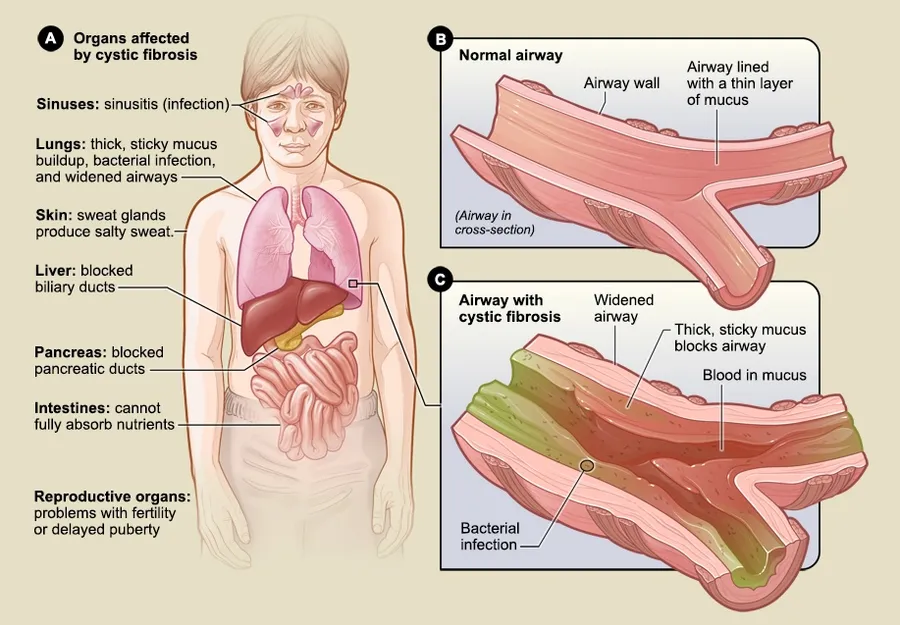
Cystic fibrosis (CF) is an inherited disease of the mucus and sweat glands. It affects mostly your lungs, pancreas, liver, intestines, sinuses, and sex organs. CF causes your mucus to be thick and sticky. The mucus clogs the lungs, causing breathing problems and making it easy for bacteria to grow. This can lead to repeated lung infections and lung damage.
The symptoms and severity of CF can vary. Some people have serious problems from birth. Others have a milder version of the disease that doesn't show up until they are teens or young adults. Sometimes you will have few symptoms, but later you may have more symptoms.
CF is diagnosed through various tests, such as gene, blood, and sweat tests. There is no cure for CF, but treatments have improved greatly in recent years. In the past, most deaths from CF were in children and teenagers. Today, with improved treatments, some people who have CF are living into their forties, fifties, or older. Treatments may include chest physical therapy, nutritional and respiratory therapies, medicines, and exercise.
NIH: National Heart, Lung, and Blood Institute
Signs and symptoms
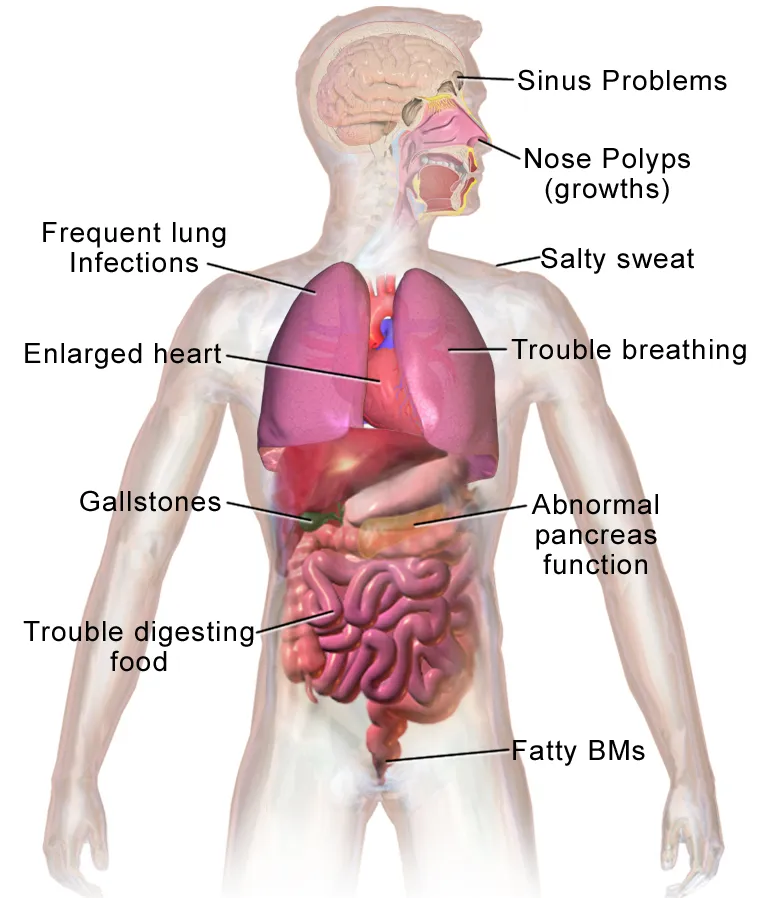
Cystic fibrosis typically manifests early in life. Newborns and infants with cystic fibrosis tend to have frequent, large, greasy stools (a result of malabsorption) and are underweight for their age. Of newborns, 15–20% have their small intestine blocked by meconium, often requiring surgery to correct. Newborns occasionally have neonatal jaundice due to blockage of the bile ducts. Children with cystic fibrosis lose excessive salt in their sweat, and parents notice salt crystallizing on the skin, or a salty taste when they kiss their child.
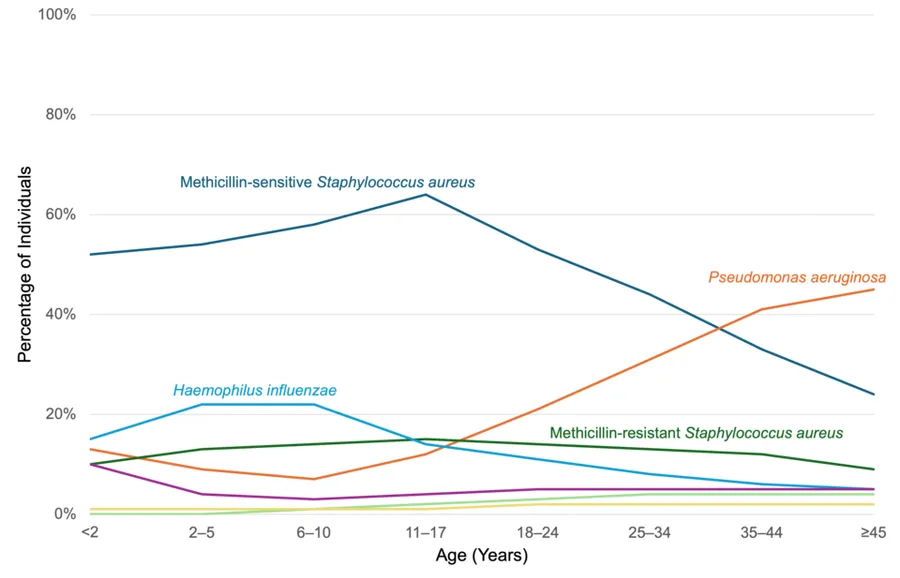
The primary cause of morbidity and death in people with cystic fibrosis is progressive lung disease, which eventually leads to respiratory failure. This typically begins as a prolonged respiratory infection that continues until treated with antibiotics. Chronic infection of the respiratory tract is nearly universal in people with cystic fibrosis, with Pseudomonas aeruginosa, fungi, and mycobacteria all becoming increasingly common over time. Inflammation of the upper airway results in frequent runny nose and nasal obstruction. Nasal polyps are common, particularly in children and teenagers. As the disease progresses, people tend to have shortness of breath, and a chronic cough that produces sputum. Breathing problems make it increasingly challenging to exercise, and prolonged illness causes those affected to be underweight for their age. In late adolescence or adulthood, people begin to develop severe signs of lung disease: wheezing, digital clubbing, cyanosis, coughing up blood, pulmonary heart disease, and collapsed lung (atelectasis or pneumothorax).
In rare cases, cystic fibrosis can manifest itself as a coagulation disorder. Vitamin K is normally absorbed from breast milk, formula, and later, solid foods. This absorption is impaired in some CF patients. Young children are especially sensitive to vitamin K malabsorptive disorders because only a very small amount of vitamin K crosses the placenta, leaving the child with very low reserves and limited ability to absorb vitamin K from dietary sources after birth. Because clotting factors II, VII, IX, and X are vitamin K–dependent, low levels of vitamin K can result in coagulation problems. Consequently, when a child presents with unexplained bruising, a coagulation evaluation may be warranted to determine whether an underlying disease is present.
Lungs and sinuses
Lung disease results from clogging of the airways due to mucus build-up, decreased mucociliary clearance, and resulting inflammation. In later stages, changes in the architecture of the lung, such as pathology in the major airways (bronchiectasis), further exacerbate difficulties in breathing. Other signs include high blood pressure in the lung (pulmonary hypertension), heart failure, difficulties getting enough oxygen to the body (hypoxia), and respiratory failure requiring support with breathing masks, such as bilevel positive airway pressure machines or ventilators. Staphylococcus aureus, Haemophilus influenzae, and Pseudomonas aeruginosa are the three most common organisms causing lung infections in CF patients. In addition, opportunistic infection due to Burkholderia cepacia complex can occur, especially through transmission from patient to patient.
In addition to typical bacterial infections, people with CF more commonly develop other types of lung diseases. Among these is allergic bronchopulmonary aspergillosis, in which the body's response to the common fungus Aspergillus fumigatus causes worsening of breathing problems. Another is infection with Mycobacterium avium complex, a group of bacteria related to tuberculosis, which can cause lung damage and do not respond to common antibiotics.
The mucus in the paranasal sinuses is equally thick and may also cause blockage of the sinus passages, leading to infection. This may cause facial pain, fever, nasal drainage, and headaches. Individuals with CF may develop overgrowth of the nasal tissue (nasal polyps) due to inflammation from chronic sinus infections. Recurrent sinonasal polyps can occur in 10% to 25% of CF patients. These polyps can block the nasal passages and increase breathing difficulties.
Cardiorespiratory complications are the most common causes of death (about 30%) among patients at CF centers in the United States.
Gastrointestinal
Digestive problems are also prevalent in individuals with CF. Approximately 15–20% of newborns diagnosed with CF experience intestinal blockage (meconium ileus), and other digestive issues may arise due to mucus accumulation in the pancreas. Consequently, there is impaired insulin production, leading to cystic fibrosis-related diabetes mellitus. Moreover, enzyme transport disruption from the pancreas to the intestines results in digestive problems such as recurrent diarrhea or weight loss.
In cystic fibrosis, there is impaired chloride secretion due to the mutation of CFTR. This disrupts the ionic balance, causes impaired bicarbonate secretion, and alters the pH. The pancreatic enzymes that work in a specific pH range cannot act as the chyme is not neutralized by bicarbonate ions. This causes impairment of the digestion process.
The thick mucus seen in the lungs has a counterpart in thickened secretions from the pancreas, an organ responsible for providing digestive juices that help break down food. These secretions block the exocrine movement of the digestive enzymes into the duodenum and result in irreversible damage to the pancreas, often with painful inflammation (pancreatitis). The pancreatic ducts are totally plugged in more advanced cases, usually seen in older children or adolescents. This causes atrophy of the exocrine glands and progressive fibrosis.
In addition, protrusion of internal rectal membranes (rectal prolapse) is more common, occurring in as many as 10% of children with CF, and it is caused by increased fecal volume, malnutrition, and increased intra–abdominal pressure due to coughing.
Individuals with CF also have difficulties absorbing the fat-soluble vitamins A, D, E, and K.
In addition to the pancreas problems, people with CF experience more heartburn, intestinal blockage by intussusception, and constipation. Older individuals with CF may develop distal intestinal obstruction syndrome, which occurs when feces becomes thick with mucus (inspissated) and can cause bloating, pain, and incomplete or complete bowel obstruction.
Exocrine pancreatic insufficiency occurs in the majority (85–90%) of patients with CF. It is mainly associated with "severe" CFTR mutations, where both alleles are completely nonfunctional (e.g. ΔF508). It occurs in 10–15% of patients with one "severe" and one "mild" CFTR mutation where little CFTR activity still occurs, or where two "mild" CFTR mutations exist. In these milder cases, a sufficient pancreatic exocrine function is still present so enzyme supplementation is not required. Usually, no other GI complications occur in pancreas-sufficient phenotypes, and in general, such individuals usually have excellent growth and development. Despite this, idiopathic chronic pancreatitis can occur in a subset of pancreas-sufficient individuals with CF, and is associated with recurrent abdominal pain and life-threatening complications.
Liver diseases are another common complication in CF patients. The prevalence in studies ranged from 18% at age two to 41% at age 12, with no significant increase thereafter. Another study found that males with CF are more prone to liver diseases compared to females, and those with meconium ileus have an increased risk of liver diseases.
Thickened secretions also may cause liver problems in patients with CF. Bile secreted by the liver to aid in digestion may block the bile ducts, leading to liver damage. Impaired digestion or absorption of lipids can result in steatorrhea. Over time, this can lead to scarring and nodularity (cirrhosis). The liver fails to rid the blood of toxins and does not make important proteins, such as those responsible for blood clotting.
Around 5–7% of people experience liver damage severe enough to cause symptoms: typically gallstones causing biliary colic.
Endocrine
The pancreas contains the islets of Langerhans, which are responsible for making insulin, a hormone that helps regulate blood glucose. Damage to the pancreas can lead to loss of the islet cells, leading to a type of diabetes unique to those with the disease. This cystic fibrosis-related diabetes shares characteristics of type 1 and type 2 diabetes, and is one of the principal nonpulmonary complications of CF.
Vitamin D is involved in calcium and phosphate regulation. Poor uptake of vitamin D from the diet because of malabsorption can lead to the bone disease osteoporosis in which weakened bones are more susceptible to fractures.
Infertility
Infertility affects both men and women. At least 97% of men with cystic fibrosis are infertile, but not sterile, and can have children with assisted reproductive techniques. The main cause of infertility in men with cystic fibrosis is congenital absence of the vas deferens (which normally connects the testes to the ejaculatory ducts of the penis), but potentially also by other mechanisms causing no sperm, abnormally shaped sperm, and few sperm with poor motility. Many men found to have congenital absence of the vas deferens during evaluation for infertility have a mild, previously undiagnosed form of CF. While females with CF are generally fertile, around 20% of women with CF have fertility difficulties due to thickened cervical mucus or malnutrition. In severe cases, malnutrition disrupts ovulation and causes a lack of menstruation.
Causes
CF is caused by having no functional copies (alleles) of the cystic fibrosis transmembrane conductance regulator gene CFTR. As of 2018, over 1,900 mutations leading to CF have been described, but only 5 of them have a frequency greater than 1% among patients. The most common mutant allele, ΔF508 (also termed F508del), is a deletion (Δ signifying deletion) of three nucleotides that results in a loss of the amino-acid residue phenylalanine (F) at the 508th position of the protein. This mutant allele is already present in 1 in 20 to 25 people of Northern European ancestry; it accounts for 70% of CF cases worldwide and 90% of cases in the United States; however, over 700 other mutant alleles, some of which represent new mutations, can produce CF. Although most people have two working copies (alleles) of the CFTR gene, only one is needed to prevent cystic fibrosis. CF develops when neither allele can produce a functional CFTR protein. Thus, CF is considered an autosomal recessive disease.
The CFTR gene, found at the q31.2 locus of chromosome 7, is 230,000 base pairs long, and encodes a protein that is 1,480 amino acids long. More specifically, the location is between base pair 117,120,016 and 117,308,718 on the long arm of chromosome 7, region 3, band 1, subband 2, represented as 7q31.2. Structurally, the CFTR is a type of gene known as an ABC gene. The product of this gene (the CFTR protein) is a chloride ion channel important in creating sweat, digestive juices, and mucus. This protein possesses two ATP-hydrolyzing domains, which allows the protein to use energy in the form of ATP. It also contains two domains comprising six alpha helices apiece, which allow the protein to cross the cell membrane. A regulatory binding site on the protein allows activation by phosphorylation, mainly by cAMP-dependent protein kinase. The carboxyl terminal of the protein is anchored to the cytoskeleton by a PDZ domain interaction. Most CFTR in lung passages is produced by rare ion-transporting cells that regulate mucus properties.
In addition, the evidence is increasing that genetic modifiers besides CFTR modulate the frequency and severity of the disease. One example is mannan-binding lectin, which is involved in innate immunity by facilitating phagocytosis of microorganisms. Polymorphisms in one or both mannan-binding lectin alleles that result in lower circulating levels of the protein are associated with a threefold higher risk of end-stage lung disease, as well as an increased burden of chronic bacterial infections.
Carriers
Up to one in 25 individuals of Northern European ancestry is considered a genetic carrier. The disease appears only when two of these carriers have children, as each pregnancy between them has a 25% chance of producing a child with the disease. Although only about one of every 3,000 newborns of the affected ancestry has CF, since the CFTR gene's discovery in 1989, over 2,000 variants have been identified, but only about 700 of these have been recognized as responsible for causing CF. Current tests look for the most common mutations.
The mutant alleles screened by the test vary according to a person's ethnic group or by the occurrence of CF already in the family. More than 10 million Americans, including one in 25 white Americans, are carriers of one mutant allele of the CF gene. CF is present in other races, though not as frequently as in white individuals. About one in 46 Hispanic Americans, one in 65 African Americans, and one in 90 Asian Americans carry a mutation of the CF gene.
Diagnosis
Diagnosis of cystic fibrosis is initially based on clinical findings indicative of respiratory, gastrointestinal, and/or genitourinary disease. Generally, definitive diagnosis of CF requires the presence of typical clinical features, a history of CF in a sibling, or a positive newborn screen, in addition to laboratory evidence of CFTR dysfunction. Laboratory evidence may consist of two elevated sweat chloride concentrations (>60 mmol/L) obtained on separate days, identification of two pathogenic genetic variants, or an abnormal nasal potential difference measurement.
In many localities all newborns are screened for cystic fibrosis within the first few days of life, typically by blood test for high levels of immunoreactive trypsinogen. By 2010 every US state had instituted newborn screening programs and as of 2016, 21 European countries had programs in at least some regions. Immunoreactive trypsinogen (IRT) levels can be increased in individuals who have a single mutated copy of the CFTR gene (carriers) or, in rare instances, in individuals with two normal copies of the CFTR gene. Because IRT levels can fluctuate over time, newborn screening programs often use percentile-based cutoffs (e.g., IRT levels >95th percentile). Due to false positives, CF screening in newborns can be controversial. Of note, a positive screen identifies newborns with a high-likelihood of having CF, but an elevated IRT alone can not establish a diagnosis.
Newborns with positive tests or those who are otherwise suspected of having cystic fibrosis based on symptoms or family history, then undergo a sweat test. An electric current is used to drive pilocarpine into the skin, stimulating sweating. The sweat is collected and analyzed for salt levels. Having unusually high levels of chloride in the sweat (>60 mmol/L) suggests CFTR is dysfunctional; the person is then diagnosed with cystic fibrosis. In contrast, a sweat chloride concentration <30 mmol/L makes the diagnosis of CF unlikely. In many cases, a parent initially suspects the diagnosis because the infant's skin tastes salty.
Genetic testing is also available to identify the CFTR mutations typically associated with cystic fibrosis. Many laboratories can test for the 30–96 most common CFTR mutations, which can identify over 90% of people with cystic fibrosis.
People with CF also have less thiocyanate and hypothiocyanite in their saliva and mucus. In the case of milder forms of CF, transepithelial potential difference measurements can be helpful. In patients with an equivocal or normal sweat chloride test, diagnosis may be supported by nasal potential difference testing, in which an increased voltage response to topical amiloride on the nasal epithelium is followed by absent or reduced voltage response to a beta-adrenergic agonist.
Prenatal
Women who are pregnant or couples planning a pregnancy can have themselves tested for the CFTR gene mutations to determine the risk that their child will be born with CF. Testing is typically performed first on one or both parents and, if the risk of CF is high, testing on the fetus is performed. The American College of Obstetricians and Gynecologists recommends all people thinking of becoming pregnant be tested to see if they are a carrier.
Because the development of CF in the fetus requires each parent to pass on a mutated copy of the CFTR gene and because CF testing is expensive, testing is often performed initially on one parent. If testing shows that the parent is a CFTR gene mutation carrier, the other parent is tested to calculate the risk that their children will have CF. CF can result from more than a thousand different mutations. As of 2016, typically only the most common mutations are tested for, such as ΔF508. Most commercially available tests look for 32 or fewer different mutations. If a family has a known uncommon mutation, specific screening for that mutation can be performed. Because not all known mutations are found on current tests, a negative screen does not guarantee that a child will not have CF.
During pregnancy, testing can be performed on the placenta (chorionic villus sampling) or the fluid around the fetus (amniocentesis). However, chorionic villus sampling has a risk of fetal death of one in 100 and amniocentesis of one in 200; a recent study has indicated this may be much lower, about one in 1,600.
Economically, for carrier couples of cystic fibrosis, when comparing preimplantation genetic diagnosis (PGD) with natural conception (NC) followed by prenatal testing and abortion of affected pregnancies, PGD provides net economic benefits up to a maternal age around 40 years, after which NC, prenatal testing, and abortion have a higher economic benefit.
Management
Treatment for CF is diverse, tailored to different symptoms, and includes various devices, inhalation medications to alleviate respiratory difficulties, oral enzyme supplements to address exocrine pancreatic insufficiency, and, in some cases, surgical interventions for conditions such as meconium ileus. While treatment alleviates symptoms and prevents potential complications, there is currently no cure for the disease.
The management of CF has improved significantly over the past 70 years. While infants born with it 70 years ago would have been unlikely to live beyond their first year, infants today are likely to live well into adulthood. Advances in the treatment of cystic fibrosis have meant that people with cystic fibrosis can live a fuller life less encumbered by their condition. The cornerstones of management are the proactive treatment of airway infection, encouragement of good nutrition, and an active lifestyle. Pulmonary rehabilitation as a management of CF continues throughout a person's life, and is aimed at maximizing organ function, and therefore the quality of life. Occupational therapists use energy conservation techniques in the rehabilitation process for patients with cystic fibrosis. Examples of energy conservation techniques are ergonomic principles, pursed lip breathing, and diaphragmatic breathing. People with CF tend to have fatigue and dyspnoea due to chronic pulmonary infections, so reducing the amount of energy spent during activities can help people feel better and gain more independence. At best, current treatments delay the decline in organ function. Because of the wide variation in disease symptoms, treatment typically occurs at specialist multidisciplinary centers and is tailored to the individual. Targets for therapy are the lungs, gastrointestinal tract (including pancreatic enzyme supplements), the reproductive organs (including assisted reproductive technology), and psychological support.
The most consistent aspect of therapy in CF is limiting and treating the lung damage caused by thick mucus and infection, with the goal of maintaining quality of life. Intravenous, inhaled, and oral antibiotics are used to treat chronic and acute infections. Mechanical devices and inhalation medications are used to alter and clear the thickened mucus. These therapies, while effective, can be extremely time-consuming. Oxygen therapy at home is recommended in those with significantly low oxygen levels. Many people with CF use probiotics, which are thought to be able to correct intestinal dysbiosis and inflammation, but the clinical trial evidence regarding the effectiveness of probiotics for reducing pulmonary exacerbations in people with CF is uncertain.
Antibiotics
Many people with CF are on one or more antibiotics at all times, even when healthy, to prophylactically suppress infection. The choice of antibiotics for cystic fibrosis depends on the specific bacteria that are causing the infection, as well as the patient's age, weight, and other medical conditions. Antibiotics are necessary whenever pneumonia is suspected or a noticeable decline in lung function is seen, and are usually chosen based on the results of a sputum analysis and the person's past response. This prolonged therapy often necessitates hospitalization and insertion of a more permanent IV such as a peripherally inserted central catheter or Port-a-Cath. Inhaled therapy with antibiotics such as tobramycin, colistin, and aztreonam is often given for months at a time to improve lung function by impeding the growth of colonized bacteria. Inhaled antibiotic therapy helps lung function by fighting infection, but also has significant drawbacks such as development of antibiotic resistance, tinnitus, and changes in the voice. Inhaled levofloxacin may be used to treat Pseudomonas aeruginosa in people with cystic fibrosis who are infected.
Antibiotics by mouth such as ciprofloxacin or azithromycin are given to help prevent infection or to control ongoing infection. The aminoglycoside antibiotics (e.g. tobramycin) used can cause hearing loss, damage to the balance system in the inner ear or kidney failure with long-term use. To prevent these side-effects, the amount of antibiotics in the blood is routinely measured and adjusted accordingly.
Currently, no reliable clinical trial evidence shows the effectiveness of antibiotics for pulmonary exacerbations in people with cystic fibrosis and Burkholderia cepacia complex or for the use of antibiotics to treat nontuberculous mycobacteria in people with CF.
Pseudomonas aeruginosa
The early management of Pseudomonas aeruginosa infection is usually suggested using nebulised antibiotics with or without oral antibiotics to remove the bacteria from the person's airways for some time. When choosing antibiotics to treat lung infections caused by Pseudomonas aeruginosa in people with cystic fibrosis, it is still unclear whether the choice of antibiotics should be based on the results of testing antibiotics separately (one at a time) or in combination with each other. It is also unclear if these treatment approaches for the Pseudomonas aeruginosa infection improve the person's quality of life or lifespan. The negative side effects of antibiotics for this infection are also poorly studied. Intravenous antibiotic therapy to treat Pseudomonas aeruginosa infections is not any better than antibiotics taken orally.
Methicillin-resistant Staphylococcus aureus
Methicillin-resistant Staphylococcus aureus (MRSA) infections can be dangerous for people with cystic fibrosis and can worsen lung damage leading to more rapid decline. Early antibiotic treatment is standard; however, further research is needed to determine longer-term effects and benefits (3–6 months after the treatment or longer) and survival rates associated with different treatment options.
Antibiotic adjuvant therapy
Factors related to antibiotic use, the chronicity of the disease, and the emergence of resistant bacteria demand more exploration for different strategies such as antibiotic adjuvant therapy. Antibiotic adjuvant therapy refers to therapeutic approaches that aim to improve the action of antibiotics such a pharmaceutical agents or supplements that impact the virulence of the bacterium or that change the susceptibility of the organism to the antibiotic so that the antibiotics are more effective. There is no strong evidence to recommend specific antibiotic adjuvant therapies such as β-carotene, nitric oxide, zinc supplements, or KB001-A.
CFTR modulators
CFTR modulators are medications taken by mouth that target defects in the CFTR protein rather than only treating the downstream symptoms of cystic fibrosis. Eligibility for CFTR modulator therapy depends on a person's CFTR genotype, because individual modulators are effective only for specific CFTR variants. As of 2024, approximately 90% of patients have variants that respond to an available CFTR modulator.
Ivacaftor is a modulator first approved in 2012 for the treatment of CF due to several specific mutations responsive to ivacaftor-induced CFTR protein enhancement. It is a CFTR potentiator, meaning that it improves the function of CFTR protein present at the cell surface. Ivacaftor targets the pathogenic variant G551D (present in approximately 5% of CF patients) and improves lung function by about 10%. The first year it was on the market, the list price was over $300,000 per year in the United States. In July 2015, the U.S. Food and Drug Administration approved lumacaftor/ivacaftor. Whereas ivacaftor is a CFTR potentiator, lumacaftor is a CFTR corrector, which improves processing and trafficking of misfolded CFTR protein to the cell surface. In 2018, the FDA approved the combination drug ivacaftor/tezacaftor; the manufacturer announced a list price of $292,000 per year. Tezacaftor helps move the CFTR protein to the correct position on the cell surface, and is designed to treat people with the F508del mutation (present in approximately 90% of CF patients).
In 2019, the combination drug elexacaftor/tezacaftor/ivacaftor, marketed as Trikafta, was approved for CF patients over the age of 12 in the United States, with approval extended to children aged 6 years and older in 2021. In Europe, this drug was approved in 2020 and marketed as Kaftrio. It is used in those who have at least one F508del mutation. According to the Cystic Fibrosis Foundation, "this medicine represents the single greatest therapeutic advancement in the history of CF, offering a treatment for the underlying cause of the disease that could eventually bring modulator therapy to 90 percent of people with CF." In a clinical trial, participants who received the combination drug experienced a subsequent 63% decrease in pulmonary exacerbations and a 41.8 mmol/L decrease in sweat chloride concentration. Other studies have found substantial improvements in lung function, weight gain, and reductions in respiratory symptoms such as cough and sputum production. Treatment has also been associated with reduced school or work absenteeism as well as fewer hospitalizations. By mitigating a repertoire of symptoms associated with CF, the combination drug significantly improves quality-of-life metrics. The combination drug is also known to interact with CYP3A inducers, such as carbamazepine used in the treatment of bipolar disorder, causing elexacaftor/tezacaftor/ivacaftor to circulate in the body at decreased concentrations. As such, concurrent use is not recommended.
The combination drug vanzacaftor/tezacaftor/deutivacaftor (Alyftrek) was approved for medical use in the United States in 2024.
The list price of CFTR modulators has been reported to exceed $270,000–310,000 per year in the United States; however, patients' out-of-pocket costs and the net costs paid by insurers and health systems vary according to insurance coverage, financial assistance programs, and negotiated reimbursement arrangements.
For many people with CF, the lung environment is now trending toward a more physiologically healthy state. However, despite these advances, early studies show that pathogens, including Pseudomonas aeruginosa, often persist in the lungs of pwCF on modulators.
Aerosolized medications
Aerosolized medications that help loosen secretions include dornase alfa and hypertonic saline. Dornase alfa is a recombinant human deoxyribonuclease, which breaks down DNA in the sputum, thus decreasing its viscosity. Dornase alfa may improve lung function; however, there is no strong evidence that it is better than other hyperosmolar therapies. Inhaled hypertonic (7%) saline is believed to draw water into the airway, rehydrating airway mucus and improving mucus clearance.
Other medications
Denufosol, an investigational drug, opens an alternative chloride channel, helping to liquefy mucus. Whether inhaled corticosteroids are useful is unclear, but stopping inhaled corticosteroid therapy is safe. There is weak evidence that corticosteroid treatment may cause harm by interfering with growth. Pneumococcal vaccination has not been studied as of 2014. As of 2014, there is no clear evidence from randomized controlled trials that the influenza vaccine is beneficial for people with cystic fibrosis. Ursodeoxycholic acid, a bile salt, has been used; however, a 2021 study aimed at evaluating whether the incidence of severe liver disease differed between CF centers routinely prescribing or not prescribing UDCA found no reduction in portal hypertension.
Nutrient supplementation
It is uncertain whether vitamin A or beta-carotene supplementation has any effect on eye and skin problems caused by vitamin A deficiency.
There is no strong evidence that people with cystic fibrosis can prevent osteoporosis by increasing their intake of vitamin D.
For people with vitamin E deficiency and cystic fibrosis, there is evidence that vitamin E supplementation may improve vitamin E levels, although it is still uncertain what effect supplementation has on vitamin E-specific deficiency disorders or on lung function.
Robust evidence regarding the effects of vitamin K supplementation in people with cystic fibrosis is lacking as of 2020.
Various studies have examined the effects of omega-3 fatty acid supplementation for people with cystic fibrosis but the evidence is uncertain whether it has any benefits or adverse effects.
Procedures
Several techniques are used to dislodge sputum and encourage its expectoration. One technique good for short-term airway clearance is chest physiotherapy where a respiratory therapist percusses an individual's chest by hand several times a day, to loosen up secretions. This "percussive effect" can be administered also through specific devices that use chest wall oscillation or intrapulmonary percussive ventilator. Other methods such as biphasic cuirass ventilation, and associated clearance mode available in such devices, integrate a cough assistance phase, as well as a vibration phase for dislodging secretions. These are portable and adapted for home use.
Another technique is positive expiratory pressure an airway clearance technique which consists of providing back pressure to the airways during expiration. This effect is provided by devices that consist of a mask or a mouthpiece in which resistance is applied only during the expiration phase. Operating principles of this technique seem to be the increase of gas pressure behind mucus through collateral ventilation along with a temporary increase in functional residual capacity preventing the early collapse of small airways during exhalation.
As lung disease worsens, mechanical breathing support may become necessary. Individuals with CF may need to wear special masks at night to help push air into their lungs. These machines, known as bilevel positive airway pressure (BiPAP) ventilators, help prevent low blood oxygen levels during sleep. Non-invasive ventilators may be used during physical therapy to improve sputum clearance. It is not known if this type of therapy has an impact on pulmonary exacerbations or disease progression. It is unknown what role non-invasive ventilation therapy has in improving exercise capacity in people with cystic fibrosis. However, the authors noted that "non-invasive ventilation may be a useful adjunct to other airway clearance techniques, particularly in people with cystic fibrosis who have difficulty expectorating sputum". During severe illness, a tube may be placed in the throat (a procedure known as a tracheostomy) to enable breathing supported by a ventilator.
For children, preliminary studies show massage therapy may help people and their families' quality of life.
Some lung infections require surgical removal of the infected part of the lung. If this is necessary many times, lung function is severely reduced. The most effective treatment options for people with CF who have spontaneous or recurrent pneumothoraces is not clear.
Transplantation
Lung transplantation may become necessary for individuals with CF as lung function and exercise tolerance decline. Although single lung transplantation is possible in other diseases, individuals with CF must have both lungs replaced because the remaining lung might contain bacteria that could infect the transplanted lung. A pancreatic or liver transplant may be performed at the same time to alleviate liver disease and/or diabetes. Lung transplantation is considered when lung function declines to the point where assistance from mechanical devices is required or survival is threatened. According to Merck Manual, "bilateral lung transplantation for severe lung disease is becoming more routine and more successful with experience and improved techniques. Among adults with CF, median survival posttransplant is about 9 years."
Gastrointestinal
Problems with the gastrointestinal system including constipation and obstruction of the gastrointestinal tract including distal intestinal obstruction syndrome are frequent complications for people with cystic fibrosis. Treatment of gastrointestinal problems is required in order to prevent a complete obstruction, reduce other CF symptoms, and improve the quality of life. While stool softeners, laxatives, and prokinetics (GI-focused treatments) are often suggested, there is no clear consensus from experts as to which approach is the best and comes with the least risks. Mucolytics or systemic treatments aimed at dysfunctional CFTR are also sometimes suggested to improve symptoms. The evidence supporting these recommendations is very weak and more research is needed to understand how to prevent and treat GI problems in people with CF. In addition, there is a risk of gastrointestinal malignancy, especially in the transplanted patient, and screening procedures may be considered at an earlier age.
Other aspects
Newborns with intestinal obstruction typically require surgery, whereas adults with distal intestinal obstruction syndrome typically do not. Treatment of pancreatic insufficiency by replacement of missing digestive enzymes allows the duodenum to properly absorb nutrients and vitamins that would otherwise be lost in the feces. However, the best dosage and form of pancreatic enzyme replacement are unclear, as are the risks and long-term effectiveness of this treatment.
So far, no large-scale research involving the incidence of atherosclerosis and coronary heart disease in adults with cystic fibrosis has been conducted. This is likely because the vast majority of people with cystic fibrosis do not live long enough to develop clinically significant atherosclerosis or coronary heart disease.
Diabetes is the most common nonpulmonary complication of CF. It mixes features of type 1 and type 2 diabetes and is recognized as a distinct entity, cystic fibrosis-related diabetes. While oral antidiabetic drugs are sometimes used, the recommended treatment is the use of insulin injections or an insulin pump, and, unlike in type 1 and 2 diabetes, dietary restrictions are not recommended. While Stenotrophomonas maltophilia is relatively common in people with cystic fibrosis, the evidence about the effectiveness of antibiotics for S. maltophilia is uncertain.
Bisphosphonates taken by mouth or intravenously can be used to improve bone mineral density in people with cystic fibrosis, but there is no proof that this reduces fractures or increases survival rates. When taking bisphosphates intravenously, adverse effects such as pain and flu-like symptoms can be an issue. The adverse effects of bisphosphates taken by mouth on the gastrointestinal tract are unknown.
Poor growth may be avoided by insertion of a feeding tube for increasing food energy through supplemental feeds or by administration of injected growth hormone.
Sinus infections are treated by prolonged courses of antibiotics. The development of nasal polyps or other chronic changes within the nasal passages may severely limit airflow through the nose, and over time reduce the person's sense of smell. Sinus surgery is often used to alleviate nasal obstruction and to limit further infections. Nasal steroids such as fluticasone propionate are used to decrease nasal inflammation.
Female infertility may be overcome by assisted reproduction technology, particularly embryo transfer techniques. Male infertility caused by the absence of the vas deferens may be overcome with testicular sperm extraction, collecting sperm cells directly from the testicles. If the collected sample contains too few sperm cells to likely have spontaneous fertilization, intracytoplasmic sperm injection can be performed. Third party reproduction is also a possibility for women with CF. Whether taking antioxidants affects outcomes is unclear.
Physical exercise is usually part of outpatient care for people with cystic fibrosis. Aerobic exercise seems to be beneficial for aerobic exercise capacity, lung function, and health-related quality of life; however, the quality of the evidence was poor.
Due to the use of aminoglycoside antibiotics, ototoxicity is common. Symptoms may include "tinnitus, hearing loss, hyperacusis, aural fullness, dizziness, and vertigo".
Prognosis
The prognosis for cystic fibrosis has improved due to earlier diagnosis through screening and better treatment and access to health care. In 1959, the median age of survival of children with CF in the United States was six months.
In 2010, survival was estimated to be 37 years for women and 40 for men. In Canada, median estimated survival had increased to 64.3 years in 2024 compared to 52.7 years in 2019 and 53.0 years in 2014. In the United States, predicted median survival had increased to 65.4 years in 2024 compared to 46.1 years in 2019 and 40.1 years in 2014. Due to the recent development of new treatments, such as CFTR modulators, life expectancy has increased rapidly during recent years. In 2020 the median predicted life expectancy was around 59 years, although there are uncertainties in the estimates due to the low number of annual deaths for persons with cystic fibrosis.
In the US, of those with CF who are more than 18 years old in 2024, 94% had graduated from high school, 67% had at least some college education, 64% were in full-time or part-time employment, 47% were single, and 47% were married or living with a partner.
Quality of life
Chronic illnesses can be difficult to manage. CF is a chronic illness that affects the "digestive and respiratory tracts resulting in generalized malnutrition and chronic respiratory infections." The thick secretions clog the airways in the lungs, which often cause inflammation and severe lung infections. If it is compromised, it affects the quality of life of someone with CF and their ability to complete activities of daily living (ADLs).
According to Schmitz and Goldbeck (2006), CF significantly increases emotional stress on both the individual and the family, "and the necessary time-consuming daily treatment routine may have further negative effects on quality of life". However, Havermans and colleagues (2006) have established that young outpatients with CF who have participated in the Cystic Fibrosis Questionnaire-Revised "rated some quality of life domains higher than did their parents". Consequently, outpatients with CF have a more positive outlook for themselves. As Merck Manual notes, "with appropriate support, most patients can make an age-appropriate adjustment at home and school. Despite myriad problems, the educational, occupational, and marital successes of patients are impressive."
Furthermore, there are many ways to enhance the quality of life in CF patients. Exercise is promoted to increase lung function. Integrating an exercise regimen into the CF patient's daily routine can significantly improve quality of life. No definitive cure for CF is known, but diverse medications are used, such as mucolytics, bronchodilators, corticosteroids, and antibiotics, that have the purpose of loosening mucus, expanding airways, decreasing inflammation, and fighting lung infections, respectively.
Epidemiology
Cystic fibrosis is the most common life-limiting autosomal recessive disease among people of European heritage. In the United States, about 30,000 individuals have CF; most are diagnosed by six months of age. In Canada, about 4,000 people have CF. Around 1 in 25 people of European descent, and one in 30 of white Americans, is a carrier of a CF mutation. Although CF is less common in these groups, roughly one in 46 Hispanics, one in 65 Africans, and one in 90 Asians carry at least one abnormal CFTR gene. Ireland has the world's highest prevalence of CF, at one in 1353; Japan's prevalence of CF is among the lowest in the world, at one in 350,000.
Although technically a rare disease, CF is ranked as one of the most widespread life-shortening genetic diseases. It is most common among nations in the Western world. An exception is Finland, where only one in 80 people carries a CF mutation. The World Health Organization states, "In the European Union, one in 2000–3000 newborns is found to be affected by CF". In the United States, one in 3,500 children is born with CF. In 1997, about one in 3,300 white children in the United States was born with CF. In contrast, only one in 15,000 African American children have it, and in Asian Americans, the rate is even lower at one in 32,000.
Cystic fibrosis is diagnosed equally in males and females. For reasons that remain unclear, data has shown that males tend to have a longer life expectancy than females, though recent studies suggest this gender gap may no longer exist, perhaps due to improvements in health care facilities. A recent study from Ireland identified a link between the female hormone estrogen and worse outcomes in CF.
The distribution of CF alleles varies among populations. The frequency of ΔF508 carriers has been estimated at one in 200 in northern Sweden, one in 143 in Lithuanians, and one in 38 in Denmark. No ΔF508 carriers were found among 171 Finns and 151 Saami people. ΔF508 does occur in Finland, but it is a minority allele there. CF is known to occur in only 20 families (pedigrees) in Finland.
Evolution
The ΔF508 mutation is estimated to have occurred up to 52,000 years ago. Numerous hypotheses have been advanced as to why such a lethal allele has persisted and spread in the human population. Other common autosomal recessive diseases such as sickle-cell anemia have been found to protect carriers from other diseases, an evolutionary trade-off known as heterozygote advantage. Resistance to the following have all been proposed as possible sources of heterozygote advantage:
Cholera: With the discovery that cholera toxin requires normal host CFTR proteins to function properly, it was hypothesized that carriers of mutant CFTR alleles benefited from resistance to cholera and other causes of diarrhea. Further studies have not confirmed this hypothesis.
Typhoid: Normal CFTR proteins are also essential for the entry of Salmonella Typhi into cells, suggesting that carriers of mutant CFTR genes might be resistant to typhoid fever. No in vivo study has yet confirmed this. In both cases, the low level of cystic fibrosis outside of Europe, in places where both cholera and typhoid fever are endemic, is not immediately explicable.
Diarrhea: The prevalence of CF in Europe might be connected with the development of cattle domestication. In this hypothesis, carriers of a single mutant CFTR allele had some protection from diarrhea caused by lactose intolerance, before the mutations that created lactose tolerance appeared.
Tuberculosis: Another possible explanation is that carriers of the mutant allele could have some resistance to tuberculosis. This hypothesis is based on the thesis that CFTR mutant allele carriers have insufficient action in one of their enzymes – arylsulphatase – which is necessary for Mycobacterium tuberculosis virulence. As M. tuberculosis would use its host's sources to affect the individual, and due to the lack of enzyme it could not present its virulence, being a carrier of CFTR mutant allele could provide resistance against tuberculosis.
Source: Wikipedia, The Free Encyclopedia · CC BY-SA 4.0
References
- Cystic Fibrosis — MedlinePlus, U.S. National Library of MedicineSource: MedlinePlus, National Library of Medicine Public domain (U.S. government work). Retrieved 2026-10-19.
- Cystic fibrosis — Wikipedia, The Free EncyclopediaText from the Wikipedia article "Cystic fibrosis" (CC BY-SA 4.0); excerpted. Licence. Retrieved 2026-10-19. Revision used.
Text above is quoted from the listed sources without changes to its meaning. Image credits and licences are shown with each image. Educational information only, not medical advice.
Related conditions
Educational overview, not medical advice. Treatment varies by person and location. Consult a qualified health professional for diagnosis or care. Content and model notes · Privacy information