
Atopic eczema (dermatitis)
Also called: Atopic dermatitis, Eczema
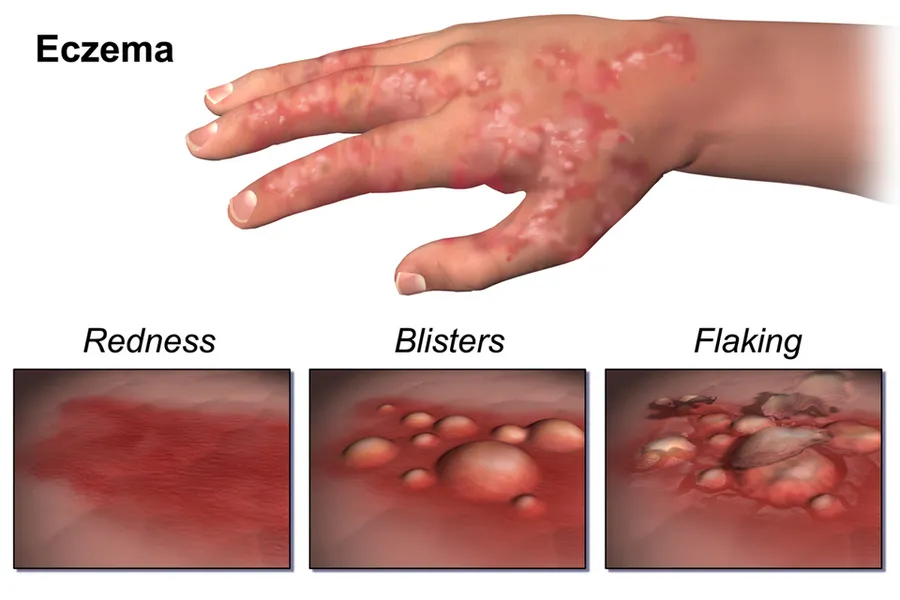
Eczema is a term for several different types of skin swelling. Eczema is also called dermatitis. Most types cause dry, itchy skin and rashes on the face, inside the elbows and behind the knees, and on the hands and feet. Scratching the skin can cause it to turn red, and to swell and itch even more.
Eczema is not contagious. The cause of eczema is unknown. It is likely caused by both genetic and environmental factors. Eczema may get better or worse over time, but it is often a long-lasting disease. People who have it may also develop hay fever and asthma.
The most common type of eczema is atopic dermatitis. It is most common in babies and children, but adults can have it too. As children who have atopic dermatitis grow older, this problem may get better or go away. But sometimes the skin may stay dry and get irritated easily.
Treatments may include medicines, skin creams, light therapy, and good skin care. You can prevent some types of eczema by avoiding:
- Things that irritate your skin, such as certain soaps, fabrics, and lotions
- Stress
- Things you are allergic to, such as food, pollen, and animals
NIH: National Institute of Arthritis and Musculoskeletal and Skin Diseases
Signs and symptoms
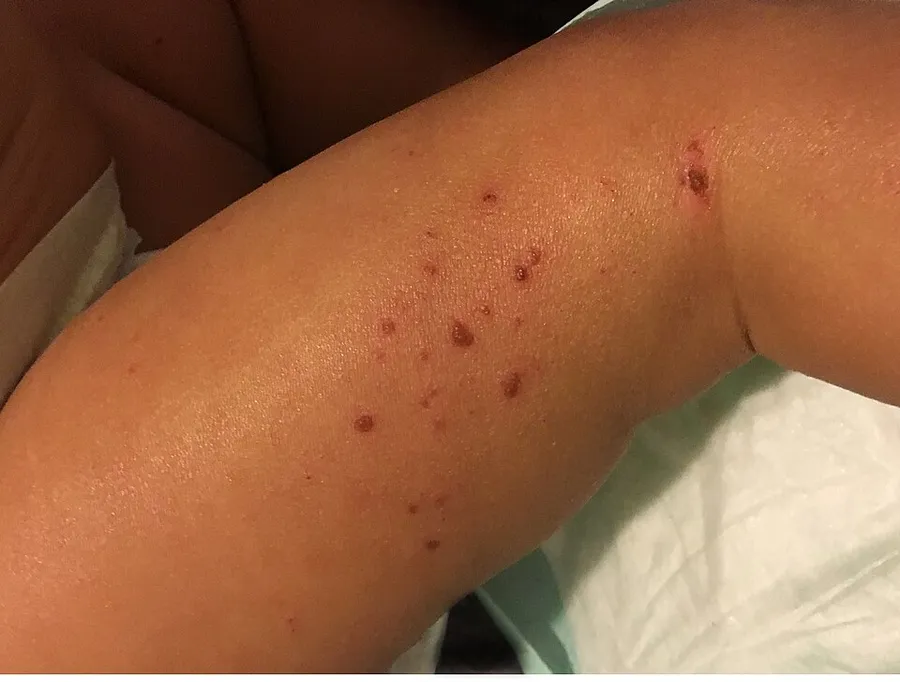
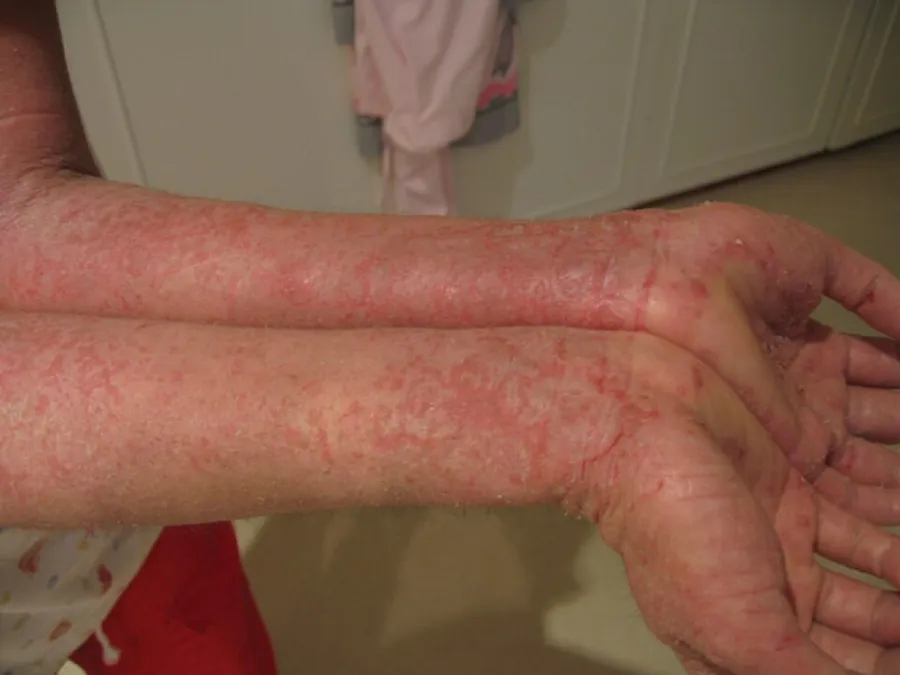
Symptoms refer to the sensations that people with AD feel, whereas signs refer to a description of the visible changes that result from AD. The main symptom of AD is itching which can be intense. Some people experience burning, soreness, or pain.
People with AD often have generally dry skin that can look greyish in people with darker skin tones. Areas of AD are not well-defined, and they are typically inflamed (red in light-coloured skin and purple or dark brown in dark-coloured skin). Surface changes include:
thickening of the skin (lichenification) where the AD has been present for a long time.
Eczema often starts on the cheeks and outer limbs and body in infants and frequently settles in the folds of the skin, such as behind the knees, folds of the elbows, around the neck, wrists, and under the buttock folds as the child grows. Any part of the body can be affected by AD.
Atopic dermatitis commonly affects the eyelids, where an extra prominent crease can form under the eyelid due to skin swelling known as Dennie-Morgan infraorbital folds. Cracks can form under the ears, which can be painful (infra-auricular fissure).
The inflammation from AD often leaves "footprints" known as postinflammatory pigmentation that can be lighter than the normal skin or darker. These marks are not scars and eventually go back to normal over months, provided the underlying AD is treated effectively.
People with AD often have dry and scaly skin that spans the entire body, except perhaps the diaper area, and intensely itchy red, splotchy, raised lesions that form in the bends of the arms or legs, face, and neck.
Causes
There is no known exact cause of AD; however, since it is classified as a multifactorial disease, it likely stems from a combination of environmental, immunologic, bacterial, and genetic factors.
For instance, it has become an increasingly common conjecture that a null filaggrin (FLG) gene plays a sizable role in the development of AD, although further study remains necessary.
Pollution
Since 1970 the rates of atopic dermatitis in the US and UK have increased three- to sixfold. Even today, people who migrate from developing nations before the age of 4 years old to industrialized nations experience a dramatic rise in the risk of atopic dermatitis and have an additional risk when living in urbanized areas of the industrial nation. Recent work has shed light on these and other data, strongly suggesting that early life industrial exposures may cause atopic dermatitis. Chemicals such as (di)isocyanates and xylene prevent the skin bacteria from producing ceramide-sphingolipid family lipids. Early life deficiency in these lipids predicts which children will go on to develop atopic dermatitis. These chemicals also directly activate an itch receptor in the skin known as TRPA1. The industrial manufacturing and use of both xylene and diisocyanates greatly increased starting in 1970, which greatly expanded the average exposure to these substances. For example, these chemicals are components of several exposures known to increase the risk of atopic dermatitis or worsen symptoms including: wildfires, automobile exhaust, wallpaper adhesives, paints, non-latex foam furniture, cigarette smoke, and are elements of fabrics like polyester, nylon, and spandex.
Climate
Low humidity and low temperature increase the prevalence and risk of flare-ups in people with atopic dermatitis.
Genetics
Genes that may contribute to AD are mainly those responsible for immune response (e.g., TH2 cytokine and JAK-STAT pathway genes) and the skin barrier (e.g., filaggrin, claudin-1, loricrin).
Immune response: Many people with AD have a family history or a personal history of atopy. Atopy is a term used to describe individuals who produce substantial amounts of IgE. Such individuals have an increased tendency to develop asthma, hay fever, eczema, urticaria, and allergic rhinitis. Up to 80% of people with atopic dermatitis have elevated total or allergen-specific IgE levels.
Skin barrier: About 30% of people with AD have mutations in the gene for the production of filaggrin (FLG), which increases the risk for the early onset of atopic dermatitis and developing asthma. However, expression of filaggrin protein or breakdown products offers no predictive utility in atopic dermatitis risk.
People with atopic dermatitis also have decreased expression of tight junction protein Claudin-1, which deteriorates the bioelectric barrier function in the epidermis.
Hygiene hypothesis
According to the hygiene hypothesis, early childhood exposure to certain microorganisms (such as gut flora and helminth parasites) protects against allergic diseases by contributing to the development of the immune system. This exposure is limited in a modern "sanitary" environment, and the incorrectly developed immune system is prone to develop allergies to harmless substances.
Some support exists for this hypothesis with respect to AD. Those exposed to dogs while growing up have a lower risk of atopic dermatitis. Also, epidemiological studies support a protective role for helminths against AD. Likewise, children with poor hygiene are at a lower risk for developing AD, as are children who drink unpasteurized milk.
Allergens
In a small percentage of cases, atopic dermatitis is caused by sensitization to foods such as milk, but there is growing consensus that food allergy most likely arises as a result of skin barrier dysfunction resulting from AD, rather than food allergy causing the skin problems. Atopic dermatitis sometimes appears associated with coeliac disease and non-coeliac gluten sensitivity. Because a gluten-free diet (GFD) improves symptoms in these cases, gluten seems to be the cause of AD in these cases. A diet high in fruits seems to have a protective effect against AD, whereas the opposite seems true for heavily processed foods.
Exposure to allergens, either from food or the environment, can exacerbate existing atopic dermatitis. Exposure to dust mites, for example, is believed to contribute to the risk of developing AD.
Hard water
The prevalence of atopic dermatitis in children may be linked to the level of calcium carbonate or "hardness" of household drinking water. Living in areas with hard water may also play a part in the development of AD in early life. However, when AD is already established, using water softeners at home does not reduce the severity of the symptoms.
Diagnosis
Atopic dermatitis is typically diagnosed clinically, meaning it is based on signs and symptoms alone, without special testing. Several different criteria developed for research have also been validated to aid in diagnosis. Of these, the UK Diagnostic Criteria, based on the work of Hanifin and Rajka, has been the most widely validated.
Other diseases that must be excluded before making a diagnosis include contact dermatitis, psoriasis, and seborrheic dermatitis.
Prevention
There are no established clinical methods using dietary or topical strategies to inhibit or prevent atopic dermatitis. Specific dietary plans during pregnancy and in early childhood, such as eating fatty fish (or taking omega-3 supplements), are not effective. Taking probiotics (for example Lactobacillus rhamnosus) during pregnancy and feeding probiotics to infants are strategies under research, with only preliminary evidence that they may be preventative.
Using moisturizers daily in infants during the first year of life does not help to prevent atopic dermatitis, and might even increase the risk of skin infections.
Epidemiology
Since the beginning of the 20th century, many inflammatory skin disorders have become more common; AD is a classic example of such a disease. Although AD was previously considered primarily a childhood disease, it is now recognized as highly prevalent in adults, with an estimated adult prevalence of 3–5% globally. It now affects 15–30% of children and 2–10% of adults in developed countries, and in the United States has nearly tripled in the past 30–40 years. Over 15 million American adults and children have AD.
Source: Wikipedia, The Free Encyclopedia · CC BY-SA 4.0
References
- Eczema — MedlinePlus, U.S. National Library of MedicineSource: MedlinePlus, National Library of Medicine Public domain (U.S. government work). Retrieved 2026-10-19.
- Atopic dermatitis — Wikipedia, The Free EncyclopediaText from the Wikipedia article "Atopic dermatitis" (CC BY-SA 4.0); excerpted. Licence. Retrieved 2026-10-19. Revision used.
Text above is quoted from the listed sources without changes to its meaning. Image credits and licences are shown with each image. Educational information only, not medical advice.
Related conditions
Educational overview, not medical advice. Treatment varies by person and location. Consult a qualified health professional for diagnosis or care. Content and model notes · Privacy information