Gallstones
Also called: Cholelithiasis, Biliary colic, Cholecystitis
Your gallbladder is a pear-shaped organ under your liver. It stores bile, a fluid made by your liver to digest fat. As your stomach and intestines digest food, your gallbladder releases bile through a tube called the common bile duct. The duct connects your gallbladder and liver to your small intestine.
Your gallbladder is most likely to give you trouble if something blocks the flow of bile through the bile ducts. That is usually a gallstone. Gallstones form when substances in bile harden. Gallstone attacks usually happen after you eat. Signs of a gallstone attack may include nausea, vomiting, or pain in the abdomen, back, or just under the right arm.
Gallstones are most common among older adults, women, overweight people, Native Americans and Mexican Americans.
Gallstones are often found during imaging tests for other health conditions. If you do not have symptoms, you usually do not need treatment. The most common treatment is removal of the gallbladder. Fortunately, you can live without a gallbladder. Bile has other ways to reach your small intestine.
NIH: National Institute of Diabetes and Digestive and Kidney Diseases
Signs and symptoms
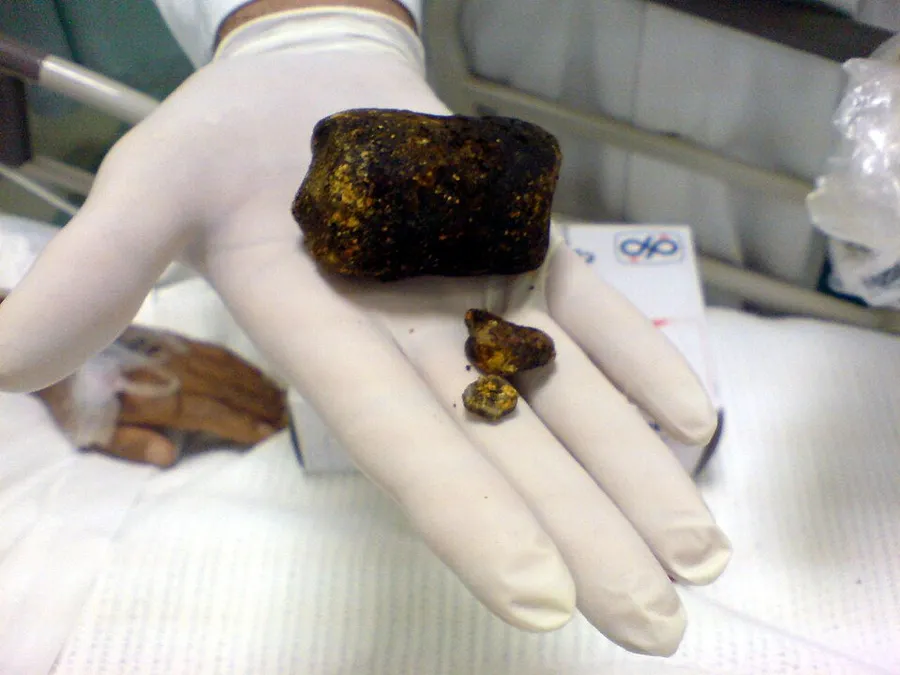
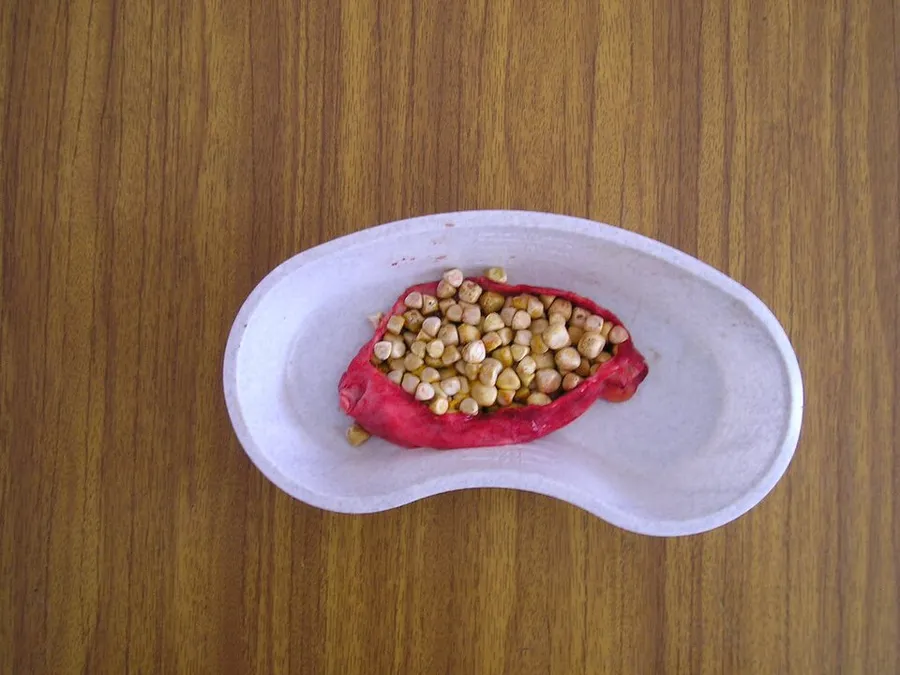
Gallstones, regardless of size or number, are asymptomatic in 60–80% of patients. These "silent stones" do not require treatment and can remain asymptomatic even years after they form.
Biliary colic
Biliary colic, also known as symptomatic cholelithiasis, is what patients consider to be a "gallstone attack". These attacks occur when a gallstone blocks the opening to the cystic duct or the cystic duct itself, increasing the pressure inside the gallbladder as it contracts, which leads to pain. Patients typically experience sudden, severe pain in the right upper side of their abdomen or in the epigastric area (the upper, center part of the abdomen). This pain typically peaks approximately 1 hour after the onset and usually subsides completely within 5 hours. Sometimes, the pain may be referred to the right shoulder; this is called "Collin's sign". Patients may also experience nausea and vomiting. These attacks often occur after eating a fatty meal or at night. Of note, laboratory studies of AST, ALT, alkaline phosphatase, direct bilirubin, amylase, lipase, and white blood cell count are normal.
Acute cholecystitis
Acute cholecystitis, or inflammation of the gallbladder, is caused by gallstones in 90–95% of cases. It presents very similarly to biliary colic: a sudden onset of severe pain in the right upper side of the abdomen or epigastric area. However, this pain differs from a gallstone attack because it lasts more than 6 hours and does not subside like a normal attack would. In addition, patients also experience fever, decreased appetite, nausea, and vomiting. On physical exam, the patient can have an increased temperature, tachycardia (fast heart rate greater than 100 beats per minute), tenderness in the right upper quadrant (RUQ) of the abdomen, and a positive Murphy's sign. Murphy's sign, which is specific for acute cholecystitis, is the sudden stoppage of inspiration when deep pressure is applied to the RUQ. Laboratory studies typically show a moderately increased white blood cell count and normal to slightly elevated AST, ALT, alkaline phosphatase, and direct bilirubin.
Choledocholithiasis
Choledocholithiasis occurs when a gallstone obstructs the common bile duct. Patients typically experience right upper quadrant pain, back pain, jaundice (or yellowing of the skin), decreased appetite, nausea, vomiting, and fever. However, choledocholithiasis, just like gallstones, can also be asymptomatic. If the patient has symptoms, the physical exam is similar to that of acute cholecystitis. Laboratory studies show an increase in direct (conjugated) bilirubin, gamma-glutamyl transpeptidase (GGT), and alkaline phosphatase. AST and ALT can be elevated or normal.
Ascending cholangitis
Ascending cholangitis is a complication of choledocholithiasis. When a gallstone obstructs the common bile duct, inflammation and infection of the biliary tree can occur. Approximately 2/3 of patients present with the classic Charcot's triad: jaundice, fever or chills, and right upper quadrant pain. This can progress to septic shock, which presents as Reynold's pentad (Charcot's triad plus hypotension and altered mental status). Laboratory studies show an increase in white blood cell count, direct bilirubin, alkaline phosphatase, AST, and ALT.
Gallstone (biliary) pancreatitis
Pancreatitis is the inflammation of the pancreas. Gallstone pancreatitis occurs when a gallstone slips down the biliary tree and gets stuck in either the pancreatic duct or at the ampulla of Vater. Gallstone pancreatitis presents the same as acute pancreatitis: a sudden onset of epigastric pain that moves towards the back, decrease in appetite, nausea, and vomiting. Laboratory studies will show an elevated lipase, amylase, and white blood cell count.
Gallstone ileus
Large gallstones can potentially erode through the gallbladder wall and into the neighboring small intestine. This large stone then travels through the small intestine until it is too narrow for the stone to continue, causing a small bowel obstruction. This obstruction often occurs at previous surgical sites or at the ileocecal valve (the portion of the bowel where the small intestine meets the large intestine). The patient presents with the inability to defecate or pass gas, nausea, vomiting, and severe abdominal pain.
Cancer
Rarely, gallbladder cancer may occur as a complication in the setting of chronic gallstones.
Risk factors
Gallstone risk increases for females (especially before menopause) and for people near or above 40 years; the condition is more prevalent among people of European or American Indigenous descent than among other ethnicities. A lack of melatonin could significantly contribute to gallbladder stones, as melatonin inhibits cholesterol secretion from the gallbladder, enhances the conversion of cholesterol to bile, and is an antioxidant, which is able to reduce oxidative stress to the gallbladder. Gilbert syndrome has been linked to an increased risk of gallstones. Researchers believe that gallstones may be caused by a combination of factors, including inherited body chemistry, body weight, gallbladder motility (movement), and low-calorie diet. The absence of such risk factors does not, however, preclude the formation of gallstones.
Nutritional factors that may increase risk of gallstones include constipation; eating fewer meals per day; low intake of the nutrients folate, magnesium, calcium, and vitamin C; low fluid consumption; and, at least for men, a high intake of carbohydrate, a high glycemic load, and high glycemic index diet. Wine and whole-grained bread may decrease the risk of gallstones.
Rapid weight loss increases risk of gallstones. The weight loss drug orlistat is known to increase the risk of gallstones.
Cholecystokinin deficiency caused by celiac disease increases risk of gallstone formation, especially when diagnosis of celiac disease is delayed.
Pigment gallstones are most commonly seen in the developing world. Risk factors for pigment stones include hemolytic anemias (such as from sickle-cell disease and hereditary spherocytosis), cirrhosis, and biliary tract infections. People with erythropoietic protoporphyria (EPP) are at increased risk to develop gallstones. Additionally, prolonged use of proton pump inhibitors has been shown to decrease gallbladder function, potentially leading to gallstone formation.
Cholesterol modifying medications can affect gallstone formation. Statins inhibit cholesterol synthesis and there is evidence that their use may decrease the risk of getting gallstones. Fibrates increase cholesterol concentration in bile and their use has been associated with an increased risk of gallstones. Bile acid malabsorption may also be a risk.
Diagnosis
Diagnosis is typically confirmed by abdominal ultrasound. Other imaging techniques used are ERCP and MRCP. Gallstone complications may be detected on blood tests.
On abdominal ultrasound, sinking gallstones usually have posterior acoustic shadowing. In floating gallstones, reverberation echoes (or comet-tail artifact) is seen instead in a clinical condition called adenomyomatosis. Another sign is wall-echo-shadow (WES) triad (or double-arc shadow) which is also characteristic of gallstones.
A positive Murphy's sign is a common finding on physical examination during a gallbladder attack.
Prevention
Maintaining a healthy weight by getting sufficient exercise and eating a healthy diet that is high in fiber may help prevent gallstone formation.
Ursodeoxycholic acid (UDCA) appears to prevent formation of gallstones during weight loss. A high fat diet during weight loss also appears to prevent gallstones.
Lithotripsy
Extracorporeal shock wave lithotripsy is a non-invasive method to manage gallstones that uses high-energy sound waves to disintegrate them first applied in January 1985.
Side effects of extracorporeal shock wave lithotripsy include biliary pancreatitis and liver haematoma.
The term is derived from the Greek words meaning 'breaking (or pulverizing) stones': litho- + τρίψω, tripso).
Surgical
Cholecystectomy (gallbladder removal) has a 99% chance of eliminating the recurrence of cholelithiasis. The lack of a gallbladder has no negative consequences in most people, however 10 to 15% of people develop postcholecystectomy syndrome, which may cause nausea, indigestion, diarrhea, and episodes of abdominal pain.
There are two surgical options for cholecystectomy:
Open cholecystectomy is performed via an abdominal incision (laparotomy) below the lower right ribs. Recovery typically requires 3–5 days of hospitalization, with a return to normal diet a week after release and to normal activity several weeks after release.
Laparoscopic cholecystectomy, introduced in the 1980s, is performed via three to four small puncture holes for a camera and instruments. Post-operative care typically includes a same-day release or a one-night hospital stay, followed by a few days of home rest and pain medication. Perforation of the gall bladder is not uncommon—it has been reported in the range of 10% to 40%. Unretrieved gallstone spillage has been reported as 6% to 30%, but gallstones that are not retrieved rarely cause complications (0.08%–0.3%).
Obstruction of the common bile duct with gallstones can sometimes be relieved by endoscopic retrograde sphincterotomy (ERS) following endoscopic retrograde cholangiopancreatography (ERCP).
Surgery carries risks and some people continue to experience symptoms (including pain) afterwards, for reasons that remain unclear. An alternative option is to adopt a 'watch and wait' strategy before operating to see if symptoms resolve. A study compared the 2 approaches for uncomplicated gallstones and after 18 months, both approaches were associated with similar levels of pain. The watch and wait approach was also less costly (more than £1000 less per patient).
Medical
The medications ursodeoxycholic acid (UDCA) and chenodeoxycholic acid (CDCA) have been used in treatment to dissolve gallstones. A 2013 meta-analysis concluded that UDCA or higher dietary fat content appeared to prevent formation of gallstones during weight loss. Medical therapy with oral bile acids has been used to treat small cholesterol stones, and for larger cholesterol gallstones when surgery is either not possible or unwanted. CDCA treatment can cause diarrhea, mild reversible hepatic injury, and a small increase in the plasma cholesterol level. UDCA may need to be taken for years.
Source: Wikipedia, The Free Encyclopedia · CC BY-SA 4.0
References
- Gallstones — MedlinePlus, U.S. National Library of MedicineSource: MedlinePlus, National Library of Medicine Public domain (U.S. government work). Retrieved 2026-10-19.
- Gallstone — Wikipedia, The Free EncyclopediaText from the Wikipedia article "Gallstone" (CC BY-SA 4.0); excerpted. Licence. Retrieved 2026-10-19. Revision used.
Text above is quoted from the listed sources without changes to its meaning. Image credits and licences are shown with each image. Educational information only, not medical advice.
Related conditions
Educational overview, not medical advice. Treatment varies by person and location. Consult a qualified health professional for diagnosis or care. Content and model notes · Privacy information