Pancreatic cancer
Also called: Pancreatic adenocarcinoma
The pancreas is a gland behind your stomach and in front of your spine. It produces the juices that help break down food and the hormones that help control blood sugar levels. Pancreatic cancer usually begins in the cells that produce the juices. Some risk factors for developing pancreatic cancer include:
- Smoking
- Long-term diabetes
- Chronic pancreatitis
- Certain hereditary disorders
Pancreatic cancer is hard to catch early. It doesn't cause symptoms right away. When you do get symptoms, they are often vague or you may not notice them. They include yellowing of the skin and eyes, pain in the abdomen and back, weight loss and fatigue. Also, because the pancreas is hidden behind other organs, health care providers cannot see or feel the tumors during routine exams. Doctors use a physical exam, blood tests, imaging tests, and a biopsy to diagnose it.
Because it is often found late and it spreads quickly, pancreatic cancer can be hard to treat. Possible treatments include surgery, radiation, chemotherapy, and targeted therapy. Targeted therapy uses drugs or other substances that attack specific cancer cells with less harm to normal cells.
NIH: National Cancer Institute
Types
The many types of pancreatic cancer can be divided into two general groups. The vast majority of cases (about 95%) occur in the part of the pancreas that produces digestive enzymes, known as the exocrine component. Several subtypes of exocrine pancreatic cancers are described, but their diagnosis and treatment have much in common.
The small minority of cancers that arise in the hormone-producing (endocrine) tissue of the pancreas have different clinical characteristics and are called pancreatic neuroendocrine tumors, sometimes abbreviated as "PanNETs". Both groups occur mainly (but not exclusively) in people over 40, and are slightly more common in men, but some rare subtypes mainly occur in women or children.
Exocrine cancers
The exocrine group is dominated by pancreatic adenocarcinoma (variations of this name may add "invasive" and "ductal"), which is by far the most common type, representing about 85% of all pancreatic cancers. Nearly all these start in the ducts of the pancreas, as pancreatic ductal adenocarcinoma (PDAC). This is despite the fact that the tissue from which it arises – the pancreatic ductal epithelium – represents less than 10% of the pancreas by cell volume, because it constitutes only the ducts (an extensive but capillary-like duct-system fanning out) within the pancreas. This cancer originates in the ducts that carry secretions (such as enzymes and bicarbonate) away from the pancreas. About 60–70% of adenocarcinomas occur in the head of the pancreas.
The next-most common type, acinar cell carcinoma of the pancreas, arises in the clusters of cells that produce these enzymes, and represents 5% of exocrine pancreas cancers. Like the 'functioning' endocrine cancers described below, acinar cell carcinomas may cause over-production of certain molecules, in this case digestive enzymes, which may cause symptoms such as skin rashes and joint pain.
Cystadenocarcinomas account for 1% of pancreatic cancers, and they have a better prognosis than the other exocrine types.
Pancreatoblastoma is a rare form, mostly occurring in childhood, and with a relatively good prognosis. Other exocrine cancers include adenosquamous carcinomas, signet ring cell carcinomas, hepatoid carcinomas, colloid carcinomas, undifferentiated carcinomas, and undifferentiated carcinomas with osteoclast-like giant cells. Solid pseudopapillary tumor is a rare low-grade neoplasm that mainly affects younger women, and generally has a very good prognosis.
Pancreatic mucinous cystic neoplasms are a broad group of pancreas tumors that have varying malignant potential. They are being detected at a greatly increased rate as CT scans become more powerful and common, and discussion continues as how best to assess and treat them, given that many are benign.
Neuroendocrine
The small minority of tumors that arise elsewhere in the pancreas are mainly pancreatic neuroendocrine tumors (PanNETs). Neuroendocrine tumors (NETs) are a diverse group of benign or malignant tumors that arise from the body's neuroendocrine cells, which are responsible for integrating the nervous and endocrine systems. NETs can start in most organs of the body, including the pancreas, where the various malignant types are all considered to be rare. PanNETs are grouped into 'functioning' and 'nonfunctioning' types, depending on the degree to which they produce hormones.
The functioning types secrete hormones such as insulin, gastrin, and glucagon into the bloodstream, often in large quantities, giving rise to serious symptoms such as low blood sugar, but also favoring relatively early detection. The most common functioning PanNETs are insulinomas and gastrinomas, named after the hormones they secrete. The nonfunctioning types do not secrete hormones in a sufficient quantity to give rise to overt clinical symptoms, so nonfunctioning PanNETs are often diagnosed only after the cancer has spread to other parts of the body.
As with other neuroendocrine tumors, the history of the terminology and classification of PanNETs is complex. PanNETs are sometimes called "islet cell cancers", though they are now known to not actually arise from islet cells as previously thought.
Signs and symptoms
Since pancreatic cancer rarely causes recognizable symptoms in its early stages, the disease is typically not diagnosed until tumors are large or have spread beyond the pancreas. The first symptom that most people notice is jaundice (yellowing of the skin and eyes) as the tumor grows large enough to block the bile duct, causing a buildup of yellow bilirubin in the body. People with jaundice can also have noticeably dark urine, light-colored or gray stools, and itchy skin.
A blocked bile duct can also cause the gallbladder to enlarge, which can sometimes be felt as a swollen lump just under the ribs on the right side. Tumors can also start to press on nearby organs, causing pain in the upper abdomen or back. Tumors that press on the stomach can result in nausea, vomiting, and pain that worsens after eating. Damage to the pancreas as tumors grow can reduce the organ's ability to make insulin resulting in diabetes, which typically manifests as increased thirst, hunger, and frequency of urination.
People with pancreatic cancer often experience general whole-body symptoms, most commonly fatigue and reduced appetite leading to unintended weight loss. Pancreatic cancer, as well as some other cancers, can increase one's risk of blood clots. Clots of the blood vessels under the skin (superficial thrombophlebitis) cause pain, redness, and swelling at the clot sites.
Clots can seem to resolve on their own, then reappear at nearby sites, called migratory thrombophlebitis or Trousseau's syndrome. Clots in larger blood vessels deeper in the body (called deep vein thromboses) cause pain and swelling of the affected body area. Clots in the blood vessels of the lung (called pulmonary embolism) can cause chest pain and difficulty breathing.
Metastastic disease
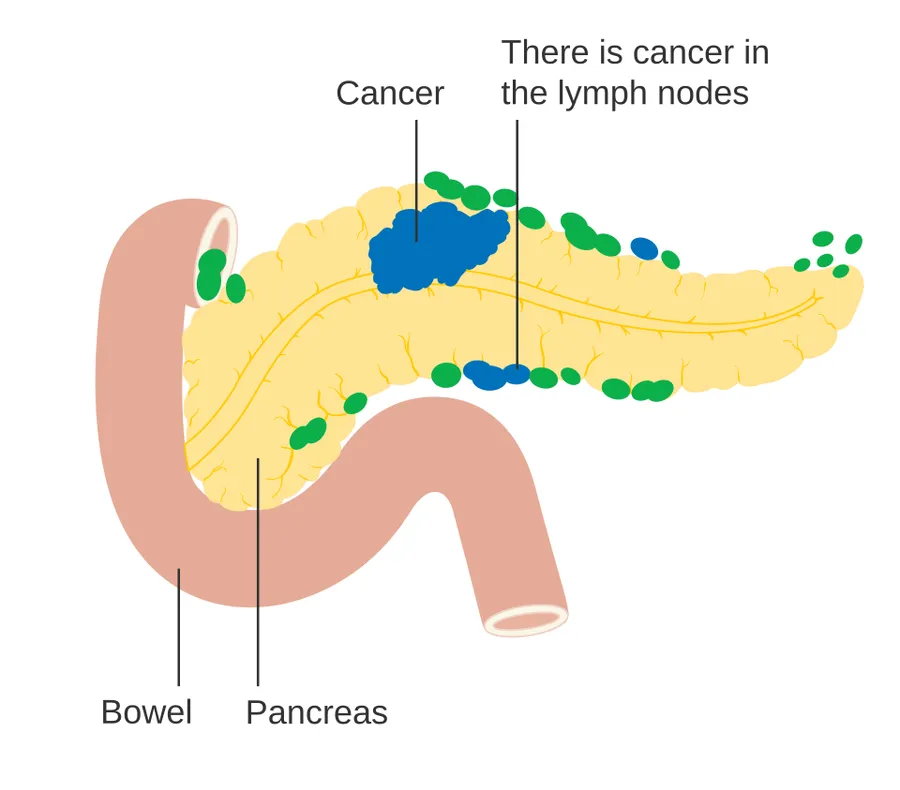
Signs and symptoms of pancreatic cancer can also be due to the spread of tumors to nearby lymph nodes or other organs. Spread to lymph nodes can cause lymph node enlargement that can be felt over the skin, most prominently in the left-side lower neck (called Virchow's node) or near the navel, called Sister Mary Joseph's node.
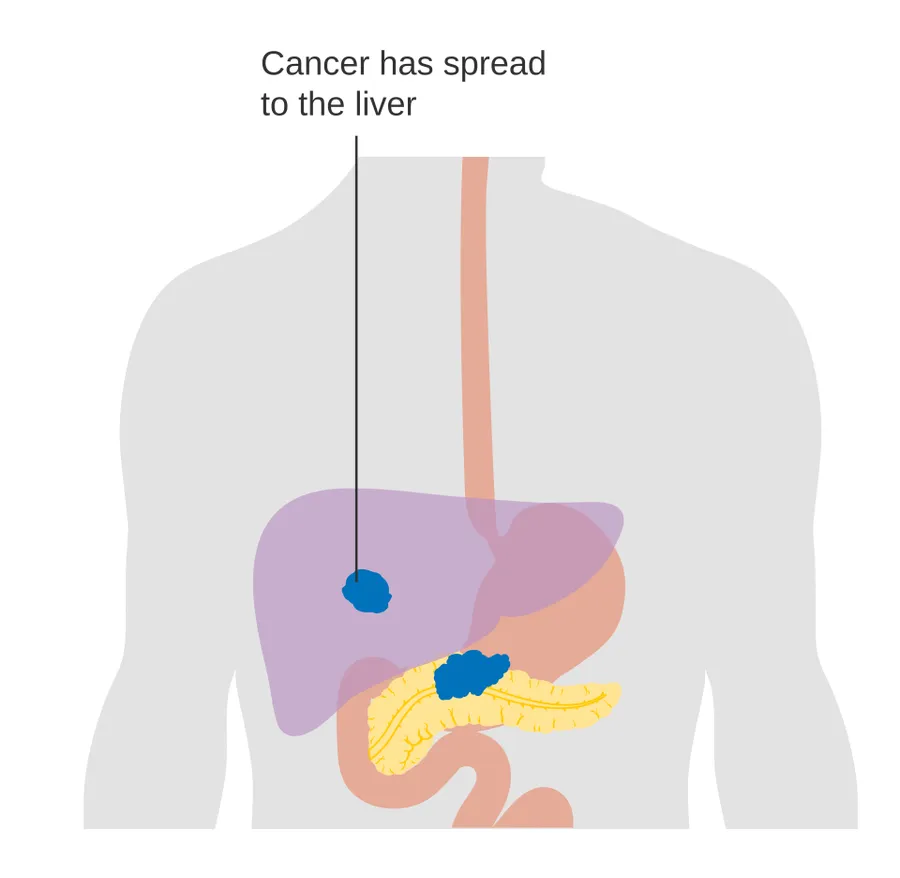
The metastasis of pancreatic cancer to other organs may also cause symptoms. Typically, pancreatic cancer spreads to the liver, lungs, peritoneum (tissue layer that envelopes abdominal organs), and less frequently to the bones.
Cancers in the pancreas may also be secondary cancers that have spread from other parts of the body. This is uncommon, found in only about 2% of cases of pancreatic cancer. Kidney cancer is by far the most common cancer to spread to the pancreas, followed by colorectal cancer, and then cancers of the skin, breast, and lung. Surgery may be performed on the pancreas in such cases, whether in hope of a cure or to alleviate symptoms.
Risk factors
Risk factors for pancreatic adenocarcinoma include:
The major preventable risk factor for pancreatic cancer is cigarette smoking, which causes around 25% of cases. Current smokers are around twice as likely to develop pancreatic cancer as those who have never smoked. The risk increases with the number of cigarettes smoked, with those who smoke over 35 cigarettes a day three times as likely to develop pancreatic cancer as those who never smoked. The risk declines after smoking cessation, returning to the level of those who never smoked within 10 to 20 years. Large studies have not found increased risk of pancreatic cancer in those exposed to secondhand smoke.
Obesity – a body mass index greater than 35 increases relative risk by about half.
Family history – 5–10% of pancreatic cancer cases have an inherited component, where people have a family history of pancreatic cancer. The risk escalates greatly if more than one first-degree relative had the disease, and more modestly if they developed it before the age of 50. Most of the genes involved have not been identified. Hereditary pancreatitis gives a greatly increased lifetime risk of pancreatic cancer of 30–40% to the age of 70. Screening for early pancreatic cancer may be offered to individuals with hereditary pancreatitis on a research basis. Some people may choose to have their pancreas surgically removed to prevent cancer from developing in the future.
Pancreatic cancer has been associated with these other rare hereditary syndromes: Peutz–Jeghers syndrome due to mutations in the STK11 tumor suppressor gene (very rare, but a very strong risk factor); dysplastic nevus syndrome (or familial atypical multiple mole and melanoma syndrome, FAMMM-PC) due to mutations in the CDKN2A tumor suppressor gene; autosomal recessive ATM and autosomal dominantly inherited mutations in the BRCA2 and PALB2 genes; hereditary non-polyposis colon cancer (Lynch syndrome); and familial adenomatous polyposis. PanNETs have been associated with multiple endocrine neoplasia type 1 (MEN1) and von Hippel Lindau syndromes.
Chronic pancreatitis appears to almost triple risk, and as with diabetes, new-onset pancreatitis may be a symptom of a tumor. The risk of pancreatic cancer in individuals with familial pancreatitis is particularly high.
Diabetes mellitus is a risk factor for pancreatic cancer and (as noted in the Signs and symptoms section) new-onset diabetes may also be an early sign of the disease. People who have been diagnosed with type 2 diabetes for longer than 10 years may have a 50% increased risk, as compared with individuals without diabetes.
Specific types of food (as distinct from obesity) have not been clearly shown to increase the risk of pancreatic cancer. Dietary factors for which some evidence shows slightly increased risk include processed meat, red meat, and meat cooked at very high temperatures (e.g. by frying, broiling, or grilling).
Alcohol
Drinking alcohol excessively is a major cause of chronic pancreatitis, which in turn predisposes to pancreatic cancer, but considerable research has failed to firmly establish alcohol consumption as a direct risk factor for pancreatic cancer. Overall, the association is consistently weak and the majority of studies have found no association, with smoking a strong confounding factor. The evidence is stronger for a link with heavy drinking, of at least six drinks per day.
Diagnosis
Medical imaging techniques, such as computed tomography (CT scan) and endoscopic ultrasound (EUS) are used both to confirm the diagnosis and to help decide whether the tumor can be surgically removed (its "resectability"). On contrast CT scan, pancreatic cancer typically shows a gradually increasing radiocontrast uptake, rather than a fast washout as seen in a normal pancreas or a delayed washout as seen in chronic pancreatitis.
Magnetic resonance imaging and positron emission tomography may also be used, and magnetic resonance cholangiopancreatography may be useful in some cases. Abdominal ultrasound is less sensitive and will miss small tumors, but can identify cancers that have spread to the liver and build-up of fluid in the peritoneal cavity (ascites). It may be used for a quick and cheap first examination before other techniques.
A biopsy by fine needle aspiration, often guided by endoscopic ultrasound, may be used where there is uncertainty over the diagnosis, but a histologic diagnosis is not usually required for removal of the tumor by surgery to go ahead.
Liver function tests can show a combination of results indicative of bile duct obstruction (raised conjugated bilirubin, γ-glutamyl transpeptidase and alkaline phosphatase levels). CA19-9 (carbohydrate antigen 19.9) is a tumor marker that is frequently elevated in pancreatic cancer. However, it lacks sensitivity and specificity, not least because 5% of people lack the Lewis (a) antigen and cannot produce CA19-9. It has a sensitivity of 80% and specificity of 73% in detecting pancreatic adenocarcinoma, and is used for following known cases rather than diagnosis.
All those with pancreatic cancer require genetic testing as high risk oncogenic mutations may provide prognostic information and certain mutations with high risk features require first degree relatives to undergo genetic testing as well.
Histopathology
The most common form of pancreatic cancer (adenocarcinoma) is typically characterized by moderately to poorly differentiated glandular structures on microscopic examination. There is typically considerable desmoplasia or formation of a dense fibrous stroma or structural tissue consisting of a range of cell types (including myofibroblasts, macrophages, lymphocytes and mast cells) and deposited material (such as type I collagen and hyaluronic acid).
This creates a tumor microenvironment that is short of blood vessels (hypovascular) and so of oxygen (tumor hypoxia). It is thought that this prevents many chemotherapy drugs from reaching the tumor, as one factor making the cancer especially hard to treat.
Exocrine cancers
Pancreatic cancer is usually staged following a CT scan. The most widely used cancer staging system for pancreatic cancer is the one formulated by the American Joint Committee on Cancer (AJCC) together with the Union for International Cancer Control (UICC). The AJCC-UICC staging system designates four main overall stages, ranging from early to advanced disease, based on TNM classification of Tumor size, spread to lymph Nodes, and Metastasis.
To help decide treatment, the tumors are also divided into three broader categories based on whether surgical removal seems possible: in this way, tumors are judged to be "resectable", "borderline resectable", or "unresectable". When the disease is still in an early stage (AJCC-UICC stages I and II), without spread to large blood vessels or distant organs such as the liver or lungs, surgical resection of the tumor can normally be performed, if the patient is willing to undergo this major operation and is thought to be sufficiently fit.
The AJCC-UICC staging system allows distinction between stage III tumors that are judged to be "borderline resectable" (where surgery is technically feasible because the celiac axis and superior mesenteric artery are still free) and those that are "unresectable" (due to more locally advanced disease); in terms of the more detailed TNM classification, these two groups correspond to T3 and T4 respectively.
Locally advanced adenocarcinomas have spread into neighboring organs, which may be any of the following (in roughly decreasing order of frequency): the duodenum, stomach, transverse colon, spleen, adrenal gland, or kidney. Very often they also spread to the important blood or lymphatic vessels and nerves that run close to the pancreas, making surgery far more difficult. Typical sites for metastatic spread (stage IV disease) are the liver, peritoneal cavity and lungs, all of which occur in 50% or more of fully advanced cases.
PanNETs
The 2010 WHO classification of tumors of the digestive system grades all the pancreatic neuroendocrine tumors (PanNETs) into three categories, based on their degree of cellular differentiation (from "NET G1" through to the poorly differentiated "NET G3"). The U.S. National Comprehensive Cancer Network recommends use of the same AJCC-UICC staging system as pancreatic adenocarcinoma. Using this scheme, the stage-by-stage outcomes for PanNETs are dissimilar to those of the exocrine cancers. A different TNM system for PanNETs has been proposed by the European Neuroendocrine Tumor Society.
Exocrine cancer
A key assessment that is made after diagnosis is whether surgical removal of the tumor is possible (see Staging), as this is the only cure for this cancer. Whether or not surgical resection can be offered depends on how much the cancer has spread. The exact location of the tumor is also a significant factor, and CT can show how it relates to the major blood vessels passing close to the pancreas. The general health of the person must also be assessed, though age in itself is not an obstacle to surgery.
Chemotherapy and, to a lesser extent, radiotherapy are likely to be offered to most people, whether or not surgery is possible. Specialists advise that the management of pancreatic cancer should be in the hands of a multidisciplinary team including specialists in several aspects of oncology, and is, therefore, best conducted in larger centers.
Surgery
Surgery with the intention of a cure is only possible in around one-fifth (20%) of new cases. Although CT scans help, in practice it can be difficult to determine whether the tumor can be fully removed (its "resectability"), and it may only become apparent during surgery that it is not possible to successfully remove the tumor without damaging other vital tissues. Whether or not surgical resection can be offered depends on various factors, including the precise extent of local anatomical adjacency to, or involvement of, the venous or arterial blood vessels, as well as surgical expertise and a careful consideration of projected post-operative recovery. The age of the person is not in itself a reason not to operate, but their general performance status needs to be adequate for a major operation.
One particular feature that is evaluated is the encouraging presence, or discouraging absence, of a clear layer or plane of fat creating a barrier between the tumor and the vessels. Traditionally, an assessment is made of the tumor's proximity to major venous or arterial vessels, in terms of "abutment" (defined as the tumor touching no more than half a blood vessel's circumference without any fat to separate it), "encasement" (when the tumor encloses most of the vessel's circumference), or full vessel involvement. A resection that includes encased sections of blood vessels may be possible in some cases, particularly if preliminary neoadjuvant therapy is feasible, using chemotherapy and/or radiotherapy.
Even when the operation appears to have been successful, cancerous cells are often found around the edges ("margins") of the removed tissue, when a pathologist examines them microscopically (this will always be done), indicating the cancer has not been entirely removed. Furthermore, cancer stem cells are usually not evident microscopically, and if they are present they may continue to develop and spread. An exploratory laparoscopy (a small, camera-guided surgical procedure) may therefore be performed to gain a clearer idea of the outcome of a full operation.
For cancers involving the head of the pancreas, the Whipple procedure is the most commonly attempted curative surgical treatment. This is a major operation which involves removing the pancreatic head and the curve of the duodenum together ("pancreato-duodenectomy"), making a bypass for food from the stomach to the jejunum ("gastro-jejunostomy") and attaching a loop of jejunum to the cystic duct to drain bile ("cholecysto-jejunostomy"). It can be performed only if the person is likely to survive major surgery and if the cancer is localized without invading local structures or metastasizing. It can, therefore, be performed only in a minority of cases. Cancers of the tail of the pancreas can be resected using a procedure known as a distal pancreatectomy, which often also entails removal of the spleen. Nowadays, this can often be done using minimally invasive surgery.
Various techniques exist for reconstructing the pancreas after a Whipple procedure, with the aim of reducing complications such as postoperative pancreatic fistula. A Cochrane review comparing duct-to-mucosa pancreaticojejunostomy with other anastomosis techniques found very low-certainty evidence and no clear differences in fistula rates, mortality, or other major complications.
Different approaches are also used for reconnecting the stomach to the small intestine after a Whipple procedure. A Cochrane review comparing antecolic versus retrocolic routes for the gastrojejunostomy found no clear difference in delayed gastric emptying, mortality, or other major complications.
Although curative surgery no longer entails the very high death rates that occurred until the 1980s, a high proportion of people (about 30–45%) still have to be treated for a post-operative sickness that is not caused by the cancer itself. The most common complication of surgery is difficulty in emptying the stomach. Certain more limited surgical procedures may also be used to ease symptoms (see Palliative care): for instance, if the cancer is invading or compressing the duodenum or colon. In such cases, bypass surgery might overcome the obstruction and improve quality of life but is not intended as a cure.
The extent of lymph node removal during pancreatic cancer surgery remains a subject of debate. A Cochrane review comparing standard versus extended lymphadenectomy found no clear evidence that more extensive lymph node removal improves overall survival or reduces cancer recurrence, but it was associated with increased operative time and a greater risk of complications.
Chemotherapy
After surgery, adjuvant chemotherapy with gemcitabine or 5-FU can be offered if the person is sufficiently fit, after a recovery period of one to two months. In people not suitable for curative surgery, chemotherapy may be used to extend life or improve its quality. Before surgery, neoadjuvant chemotherapy or chemoradiotherapy may be used in cases that are considered to be "borderline resectable" (see Staging) in order to reduce the cancer to a level where surgery could be beneficial. In other cases neoadjuvant therapy remains controversial, because it delays surgery.
Gemcitabine was approved by the United States Food and Drug Administration (FDA) in 1997, after a clinical trial reported improvements in quality of life and a five-week improvement in median survival duration in people with advanced pancreatic cancer. This was the first chemotherapy drug approved by the FDA primarily for a nonsurvival clinical trial endpoint. Chemotherapy using gemcitabine alone was the standard for about a decade, as a number of trials testing it in combination with other drugs failed to demonstrate significantly better outcomes. However, the combination of gemcitabine with erlotinib was found to increase survival modestly, and erlotinib was licensed by the FDA for use in pancreatic cancer in 2005.
The FOLFIRINOX chemotherapy regimen using four drugs was found more effective than gemcitabine, but with substantial side effects, thus only suitable for people with good performance status. This is also true of protein-bound paclitaxel (nab-paclitaxel), which was licensed by the FDA in 2013 for use with gemcitabine in pancreas cancer. By the end of 2013, either singular FOLFIRINOX or gemcitabine in combination with nab-paclitaxel(Note:) were regarded as good choices for those able to tolerate the side-effects, and singular gemcitabine remained an effective option for those who were not. Regimen changes during this period only increased survival times by a few months.
A 2023 meta-analysis found clinical evidence that the FOLFIRINOX regimen provided better overall survival (OS) than gemcitabine plus nab-paclitaxel; both increased the risk of serious grade 3/4 adverse events. An assemblage of 51 studies encompassing 11,333 persons provided comparison of seven different chemotherapy regimens. The previously promoted gemcitabine plus nab-paclitaxel regimen offered insignificant OS or quality of life (QoL) improvement (66% risk of death at 12 months (RoD) versus control group's 63%). Gemcitabine plus taxane improved those results, bettering both OS and QoL (64% RoD versus control group's 77%). FOLFIRINOX offered the best outcome improving OS and forestalling QoL deterioration (52% RoD versus control group's 77%).
Treatment regimens continue to evolve as pharmacology advances. Clinical trials are often conducted to assess novel adjuvant therapies.
In 2026, Adjuvant systemic chemotherapy after surgery is recommended for eligible patients after their recovery from resection. For medically fit patients, modified FOLFIRINOX is commonly used, while gemcitabine-based regimens remain options for those who are not suitable for intensive multi-agent chemotherapy.
Neoadjuvant chemotherapy with or without chemoradiation is recommended for borderline resectable pancreatic cancer, as per multiple consensus guidelines, though the optimal regimen is still under investigation.Standard first-line systemic therapy for metastatic or recurrent pancreatic adenocarcinoma includes FOLFIRINOX, NALIRIFOX, and gemcitabine plus nab-paclitaxel for selected patients, while gemcitabine alone is an option for those unsuitable for combination chemotherapy.
A regimen known as NALIRIFOX, comprising liposomal irinotecan with oxaliplatin, fluorouracil, and leucovorin, was approved by the United States Food and Drug Administration in 2024 for first-line treatment of metastatic pancreatic adenocarcinoma.
Radiotherapy
The role of radiotherapy as an auxiliary (adjuvant) treatment after potentially curative surgery has been controversial since the 1980s. In the early 2000s the European Study Group for Pancreatic Cancer Research (ESPAC) showed prognostic superiority of adjuvant chemotherapy over chemoradiotherapy. The European Society for Medical Oncology recommends that adjuvant radiotherapy should only be used for people enrolled in clinical trials. However, there is a continuing tendency for clinicians in the US to be more ready to use adjuvant radiotherapy than those in Europe. Many clinical trials have tested a variety of treatment combinations since the 1980s, but have failed to settle the matter conclusively.
Radiotherapy may form part of treatment to attempt to shrink a tumor to a resectable state, but its use on unresectable tumors remains controversial as there are conflicting results from clinical trials. The preliminary results of one trial, presented in 2013, "markedly reduced enthusiasm" for its use on locally advanced tumors.
Targeted therapy
For biomarker-selected subgroups of pancreatic adenocarcinoma, targeted therapy is mainly used. Maintenance olaparib may be considered for patients with metastatic pancreatic adenocarcinoma and germline BRCA1 or BRCA2 variants whose disease has not progressed after first-line platinum-based chemotherapy. Median progression-free survival was 7.4 months with olaparib compared with 3.8 months with placebo in the POLO trial, although median overall survival was not significantly improved.
For adults with advanced, unresectable, or metastatic pancreatic adenocarcinoma harboring an NRG1 gene fusion, zenocutuzumab-zbco was approved by the FDA in 2024 for those whose disease had progressed on or after prior systemic therapy, marking the first FDA approval for a specific systemic therapy for pancreatic adenocarcinoma with an NRG1 gene fusion. With NRG1 gene fusions, zenocutuzumab-zbco showed promising results in clinical trials.
Patients with metastatic PDAC have a 5-year survival of only 3% regardless of treatment. Daraxonrasib is a RAS inhibitor that unlike other RAS inhibitors inhibits all three key members of the Ras superfamily, i.e., KRAS, HRAS, and NRAS. Certain mutations in any one of these RAS proteins appear responsible for more than 90% of PDACs. In 2025, daraxonrasib received a breakthrough therapy designation from the U.S. FDA based on phase I and II (see Phases of clinical research) studies conducted by Revolution Medicines that found daraxonrasib to be effective in treating metastatic PDAC. The company reported median survival of 13.2 months with daraxonrasib vs. 6.7 months with standard chemotherapy. A more recent study examined the effects of daraxonrasib in 35 previously untreated patients with metastatic PDAC. Of the 35 patients, 34 showed control of their disease. PDAC tumors injected into C57BL/6 mice grew rapidly with the mice requiring euthanasia 20-40 days after implantation. C57BL/6 mice implanted with these tumors that were treated with daily, oral daraxonrasib (20 milligram per kilogram body weight) had significantly longer survival yet nonetheless died due to the apparent tumors becoming resistant to daraxonrasib. In contrast, the tumors in mice treated with the same dose of daraxonrasib plus afatinib and SD36 underwent rapid apoptotic cell death and complete tumor regression that endured for the study period of over 200 days. Treating with a combination of any two of the three drugs did not show this >200 day effect and the tumor implants treated with daraxonrasib did not respond to the subsequent addition of afatinib and SD36. These findings support studies on treating humans with PDAC tumors with daraxonrasib combined with other drugs.
Immunotherapy
In unselected pancreatic adenocarcinoma, immune checkpoint inhibitors have a limited role, but may be used for selected tumors with specific biomarkers such as microsatellite instability-high or mismatch repair-deficient solid tumors. The indication for pembrolizumab includes unresectable or metastatic cases that have progressed after prior treatment and have no satisfactory alternative treatment options.
Personalized mRNA vaccines
A 2025 study reports that a phase 1 clinical trial has found promising results for personalized mRNA vaccines as a potential treatment for pancreatic cancer. The trial involved 16 patients with resectable pancreatic cancer, who were monitored for up to four years. Between 2019 and 2021, participants underwent tumor removal surgery. Researchers then used genetic material from each patient's tumor to create customized mRNA vaccines, designed to help the immune system recognize and attack cancer cells. Patients also received standard treatment alongside the vaccine. Results showed that eight of the 16 participants developed T cells targeting their tumors, indicating an immune response to the vaccine.
PanNETs
Treatment of PanNETs, including the less common malignant types, may include a number of approaches. Some small tumors of less than 1 cm that are identified incidentally, for example on a CT scan performed for other purposes, may be followed by watchful waiting. This depends on the assessed risk of surgery which is influenced by the site of the tumor and the presence of other medical problems. Tumors within the pancreas only (localized tumors), or with limited metastases, for example to the liver, may be removed by surgery. The type of surgery depends on the tumor location, and the degree of spread to lymph nodes.
For localized tumors, the surgical procedure may be much less extensive than the types of surgery used to treat pancreatic adenocarcinoma described above, but otherwise surgical procedures are similar to those for exocrine tumors. The range of possible outcomes varies greatly; some types have a very high survival rate after surgery while others have a poor outlook. As all this group are rare, guidelines emphasize that treatment should be undertaken in a specialized center. Use of liver transplantation may be considered in certain cases of liver metastasis.
For functioning tumors, the somatostatin analog class of medications, such as octreotide, can reduce the excessive production of hormones. Lanreotide can slow tumor growth. If the tumor is not amenable to surgical removal and is causing symptoms, targeted therapy with everolimus or sunitinib can reduce symptoms and slow progression of the disease. Standard cytotoxic chemotherapy is generally not very effective for PanNETs, but may be used when other drug treatments fail to prevent the disease from progressing, or in poorly differentiated PanNET cancers.
Radiation therapy is occasionally used if there is pain due to anatomic extension, such as metastasis to bone. Some PanNETs absorb specific peptides or hormones, and these PanNETs may respond to nuclear medicine therapy with radiolabeled peptides or hormones such as iobenguane (iodine-131-MIBG). Radiofrequency ablation (RFA), cryoablation, and hepatic artery embolization may also be used.
Palliative care
Palliative care is medical care which focuses on treatment of symptoms from serious illness, such as cancer, and improving quality of life. Because pancreatic adenocarcinoma is usually diagnosed after it has progressed to an advanced stage, palliative care as a treatment of symptoms is often the only treatment possible.
Palliative care focuses not on treating the underlying cancer, but on treating symptoms such as pain or nausea, and can assist in decision-making, including when or if hospice care will be beneficial. Pain can be managed with medications such as opioids or through procedural intervention, by a nerve block on the celiac plexus (CPB). This alters or, depending on the technique used, destroys the nerves that transmit pain from the abdomen. CPB is a safe and effective way to reduce the pain, which generally reduces the need to use opioid painkillers, which have significant negative side effects.
Other symptoms or complications that can be treated with palliative surgery are obstruction by the tumor of the intestines or bile ducts. For the latter, which occurs in well over half of cases, a small metal tube called a stent may be inserted by endoscope to keep the ducts draining. Palliative care can also help treat depression that often comes with the diagnosis of pancreatic cancer.
Both surgery and advanced inoperable tumors often lead to digestive system disorders from a lack of the exocrine products of the pancreas (exocrine insufficiency). These can be treated by taking pancreatin which contains manufactured pancreatic enzymes, and is best taken with food. Difficulty in emptying the stomach (delayed gastric emptying) is common and can be a serious problem, involving hospitalization. Treatment may involve a variety of approaches, including draining the stomach by nasogastric aspiration and drugs called proton-pump inhibitors or H2 antagonists, which both reduce production of gastric acid. Medications like metoclopramide can also be used to clear stomach contents.
Prognosis
Pancreatic adenocarcinoma and the other less common exocrine cancers have a very poor prognosis, as they are normally diagnosed at a late stage when the cancer is already locally advanced or has spread to other parts of the body. Outcomes are much better for PanNETs: Many are benign and completely without clinical symptoms, and even those cases not treatable with surgery have an average five-year survival rate of 16%, although the outlook varies considerably according to the type.
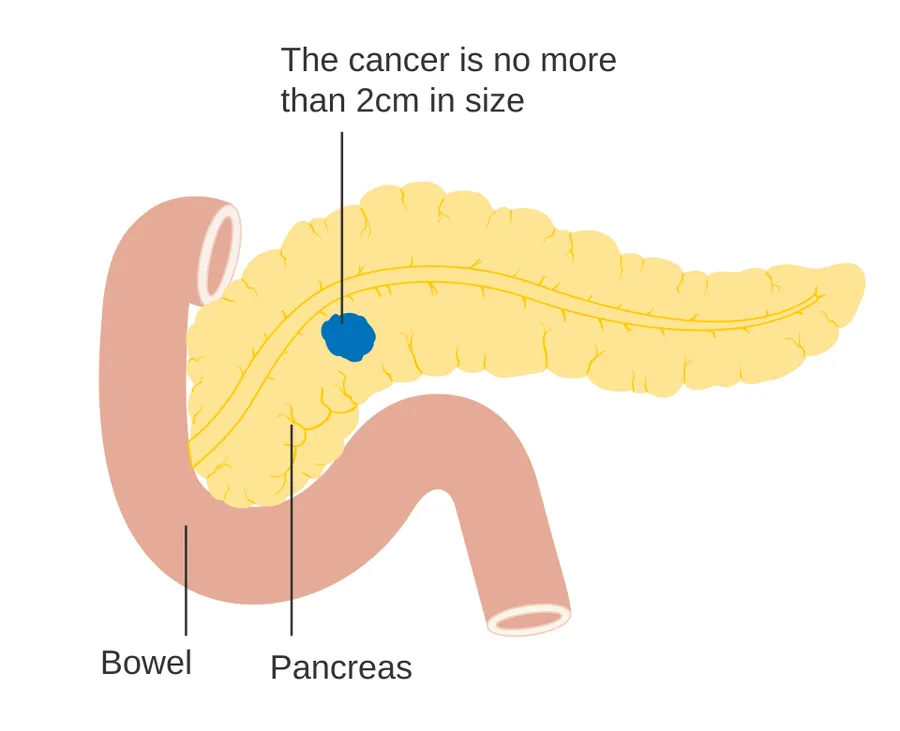
For locally advanced and metastatic pancreatic adenocarcinomas, which together represent over 80% of cases, numerous trials comparing chemotherapy regimes have shown increased survival times, but not to more than one year. Overall five-year survival for pancreatic cancer in the US has improved from 2% in cases diagnosed in 1975–1977, and 4% in 1987–1989 diagnoses, to 6% in 2003–2009. In the less than 20% of cases of pancreatic adenocarcinoma with a diagnosis of a localized and small cancerous growth (less than 2 cm in Stage T1), about 20% of Americans survive to five years.
About 1500 genes are linked to outcomes in pancreatic adenocarcinoma. These include both unfavorable genes, where high expression is related to poor outcome, for example C-Met and MUC-1, and favorable genes where high expression is associated with better survival, for example the transcription factor PELP1.
Epidemiology
Pancreatic cancer is the 12th most commonly diagnosed cancer, and the sixth leading cause of cancer death. Around 1% of people develop pancreatic cancer in their lifetime.
In 2015, pancreatic cancers of all types resulted in 411,600 deaths globally. In 2014, an estimated 46,000 people in the US were expected to be diagnosed with pancreatic cancer and 40,000 to die of it. Although it accounts for only 2.5% of new cases, pancreatic cancer is responsible for 6% of cancer deaths each year. Pancreatic cancer is the fifth most-common cause of death from cancer in the United Kingdom, and the third most-common in the United States.
The risk of developing pancreatic cancer increases with age. Most cases occur after age 65, while cases before age 40 are uncommon. The disease is slightly more common in men than in women.
In the United States, the risk for African Americans is over 50% greater than for whites, but the rates in Africa and East Asia are much lower than those in North America or Europe. The United States, Central, and eastern Europe, and Argentina and Uruguay all have high rates.
PanNETs
The annual incidence of clinically recognized pancreatic neuroendocrine tumors (PanNETs) is low (about 5 per one million person-years) and is dominated by the non-functioning types. Somewhere between 45% and 90% of PanNETs are thought to be of the non-functioning types. Studies of autopsies have uncovered small PanNETs rather frequently, suggesting that the prevalence of tumors that remain inert and asymptomatic may be relatively high. Overall PanNETs are thought to account for about 1 to 2% of all pancreatic tumors. The definition and classification of PanNETs has changed over time, affecting what is known about their epidemiology and clinical relevance.
Source: Wikipedia, The Free Encyclopedia · CC BY-SA 4.0
References
- Pancreatic Cancer — MedlinePlus, U.S. National Library of MedicineSource: MedlinePlus, National Library of Medicine Public domain (U.S. government work). Retrieved 2026-10-19.
- Pancreatic cancer — Wikipedia, The Free EncyclopediaText from the Wikipedia article "Pancreatic cancer" (CC BY-SA 4.0); excerpted. Licence. Retrieved 2026-10-19. Revision used.
Text above is quoted from the listed sources without changes to its meaning. Image credits and licences are shown with each image. Educational information only, not medical advice.
Related conditions
Educational overview, not medical advice. Treatment varies by person and location. Consult a qualified health professional for diagnosis or care. Content and model notes · Privacy information