Cholera
Cholera is a bacterial infection that causes diarrhea. The cholera bacterium is usually found in water or food that has been contaminated by feces (poop). Cholera is rare in the US. You may get it if you travel to parts of the world with poor water and sewage treatment. Outbreaks can also happen after disasters. The disease is not likely to spread directly from person to person.
Cholera infections are often mild. Some people don't have any symptoms. If you do get symptoms, they usually start 2 to 3 days after infection. The most common symptom is watery diarrhea.
In some cases, the infection can be severe, causing lots of watery diarrhea, vomiting, and leg cramps. Because you quickly lose body fluids, you are at risk for dehydration and shock. Without treatment, you could die within hours. If you think that you might have cholera, you should get medical care right away.
Doctors diagnose cholera with a stool sample or rectal swab. Treatment is the replacement of the fluid and salts that you lost through the diarrhea. This is usually with a rehydration solution that you drink. People with severe cases may need an I.V. to replace the fluids. Some of them may also need antibiotics. Most people who get fluid replacement right away will recover.
There are vaccines to prevent cholera. One of them is available for adults in the U.S. Very few Americans need it, because most people do not visit areas that have an active cholera outbreak.
There are also simple steps you can take to help to prevent cholera infection:
- Use only bottled or purified water for drinking, washing dishes, making ice cubes, and brushing your teeth
- If you do use tap water, boil it or use iodine tablets
- Wash your hands often with soap and clean water
- Make sure that the cooked food you eat is fully cooked and served hot
- Avoid unwashed or unpeeled raw fruits and vegetables
Centers for Disease Control and Prevention
Signs and symptoms
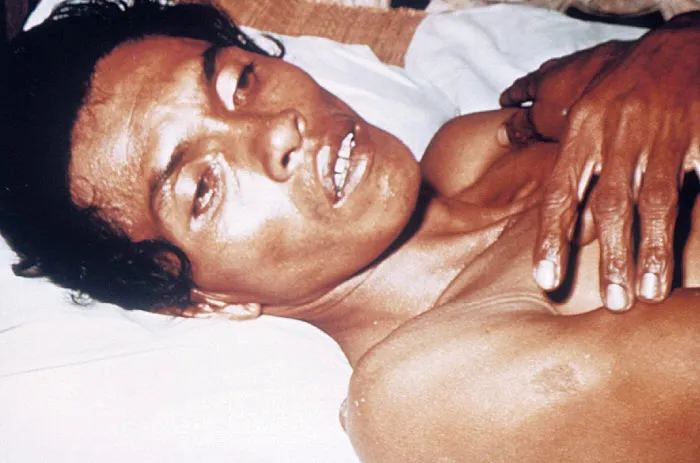
The primary symptoms of cholera are profuse diarrhea and vomiting of clear fluid. These symptoms usually start suddenly, half a day to five days after ingestion of the bacteria. The diarrhea is frequently described as "rice water" in nature and may have a fishy odor. An untreated person with cholera may produce 10 to 20 litres (3 to 5 US gal) of diarrhea a day. Severe cholera, without treatment, kills about half of affected individuals. If the severe diarrhea is not treated, it can result in life-threatening dehydration and electrolyte imbalances. Estimates of the ratio of asymptomatic to symptomatic infections have ranged from 3 to 100. Cholera has been nicknamed the "blue death" because a person's skin may turn bluish-gray from extreme loss of fluids.
Fever is rare and should raise suspicion for secondary infection. Patients can be lethargic and might have sunken eyes, dry mouth, cold clammy skin, or wrinkled hands and feet. Kussmaul breathing, a deep and labored breathing pattern, can occur because of acidosis from stool bicarbonate losses and lactic acidosis associated with poor perfusion. Blood pressure drops due to dehydration, peripheral pulse is rapid and thready, and urine output decreases with time. Muscle cramping and weakness, altered consciousness, seizures, or even coma due to electrolyte imbalances are common, especially in children.
Transmission
Transmission is usually through the fecal-oral route of contaminated food or water caused by poor sanitation. Most cholera cases in developed countries are a result of transmission by food, while in developing countries it is more often water. Cholera bacteria have been found in shellfish and plankton. Food transmission can occur when people harvest seafood such as oysters in waters infected with sewage, as Vibrio cholerae accumulates in planktonic crustaceans and the oysters eat the zooplankton. Cholera outbreaks are increasing in occurrence, distribution and intensity due to climate change.
People infected with cholera often have diarrhea, and disease transmission may occur if this highly liquid stool, colloquially referred to as "rice-water", contaminates water used by others. A single diarrheal event can cause a millionfold increase in numbers of V. cholerae in the environment. The source of the contamination is typically other people with cholera when their untreated diarrheal discharge is allowed to get into waterways, groundwater, or drinking water supplies. Drinking any contaminated water and eating any foods washed in the water, as well as shellfish living in the affected waterway, can cause a person to contract an infection. Cholera is rarely spread directly from person to person.
V. cholerae also exists outside the human body in natural water sources, either by itself or through interacting with phytoplankton, zooplankton, or biotic and abiotic detritus. Drinking such water can also result in the disease, even without prior contamination through fecal matter. However, selective pressures exist in the aquatic environment that may reduce the virulence of V. cholerae. Specifically, animal models indicate that the transcriptional profile of the pathogen changes as it prepares to enter an aquatic environment. This transcriptional change results in a loss of ability of V. cholerae to be cultured on standard media, a phenotype referred to as 'viable but non-culturable' (VBNC) or more conservatively 'active but non-culturable' (ABNC). One study indicates that the culturability of V. cholerae drops 90% within 24 hours of entering the water, and furthermore that this loss in culturability is associated with a loss in virulence.
Both toxic and non-toxic strains exist. Non-toxic strains can acquire toxicity through a temperate bacteriophage.
Susceptibility
About 100 million bacteria must typically be ingested to cause cholera in a normal healthy adult. This dose, however, is less in those with lowered gastric acidity (for instance those using proton pump inhibitors). Children are also more susceptible, with two- to four-year-olds having the highest rates of infection. Individuals' susceptibility to cholera is also affected by their blood type, with those with type O blood being the most susceptible. Persons with lowered immunity, such as persons with AIDS or malnourished children, are more likely to develop a severe case if they become infected. Any individual, even a healthy adult in middle age, can undergo a severe case, and each person's case should be measured by the loss of fluids, preferably in consultation with a professional health care provider.
The cystic fibrosis genetic mutation known as delta-F508 in humans has been said to maintain a selective heterozygous advantage: heterozygous carriers of the mutation (who are not affected by cystic fibrosis) are more resistant to V. cholerae infections. In this model, the genetic deficiency in the cystic fibrosis transmembrane conductance regulator channel proteins interferes with bacteria binding to the intestinal epithelium, thus reducing the effects of an infection.
Diagnosis
A rapid dipstick test is available to determine the presence of V. cholerae. In those samples that test positive, further testing should be done to determine antibiotic resistance. In epidemic situations, a clinical diagnosis may be made by taking a patient history and doing a brief examination. Treatment via hydration and over-the-counter hydration solutions can be started without or before confirmation by laboratory analysis, especially where cholera is a common problem.
Stool and swab samples collected in the acute stage of the disease, before antibiotics have been administered, are the most useful specimens for laboratory diagnosis. If an epidemic of cholera is suspected, the most common causative agent is V. cholerae O1. If V. cholerae serogroup O1 is not isolated, the laboratory should test for V. cholerae O139. However, if neither of these organisms is isolated, it is necessary to send stool specimens to a reference laboratory.
Infection with V. cholerae O139 should be reported and handled in the same manner as that caused by V. cholerae O1. The associated diarrheal illness should be referred to as cholera and must be reported in the United States.
Prevention
The World Health Organization (WHO) recommends focusing on prevention, preparedness, and response to combat the spread of cholera. They also stress the importance of an effective surveillance system. Governments can play a role in all of these areas.
Water, sanitation and hygiene
Although cholera may be life-threatening, prevention of the disease is normally straightforward if proper sanitation practices are followed. In developed countries, due to their nearly universal advanced water treatment and sanitation practices, cholera is rare. For example, the last major outbreak of cholera in the United States occurred in 1910–1911. Cholera is mainly a risk in developing countries in those areas where access to WASH (water, sanitation and hygiene) infrastructure is still inadequate.
Effective sanitation practices, if instituted and adhered to in time, are usually sufficient to stop an epidemic. There are several points along the cholera transmission path at which its spread may be halted:
Sterilization: Proper disposal and treatment of all materials that may have come into contact with the feces of other people with cholera (e.g., clothing, bedding, etc.) are essential. These should be sanitized by washing in hot water, using chlorine bleach if possible. Hands that touch cholera patients or their clothing, bedding, etc., should be thoroughly cleaned and disinfected with chlorinated water or other effective antimicrobial agents.
Sewage and fecal sludge management: In cholera-affected areas, sewage and fecal sludge need to be treated and managed carefully in order to stop the spread of this disease via human excreta. Provision of sanitation and hygiene is an important preventative measure. Open defecation, release of untreated sewage, or dumping of fecal sludge from pit latrines or septic tanks into the environment need to be prevented. In many cholera affected zones, there is a low degree of sewage treatment. Therefore, the implementation of dry toilets that do not contribute to water pollution, as they do not flush with water, may be an interesting alternative to flush toilets.
Sources: Warnings about possible cholera contamination should be posted around contaminated water sources with directions on how to decontaminate the water (boiling, chlorination etc.) for possible use.
Water purification: All water used for drinking, washing, or cooking should be sterilized by either boiling, chlorination, ozone water treatment, ultraviolet light sterilization (e.g., by solar water disinfection), or antimicrobial filtration in any area where cholera may be present. Chlorination and boiling are often the least expensive and most effective means of halting transmission. Cloth filters or sari filtration, though very basic, have significantly reduced the occurrence of cholera when used in poor villages in Bangladesh that rely on untreated surface water. Better antimicrobial filters, like those present in advanced individual water treatment hiking kits, are most effective. Public health education and adherence to appropriate sanitation practices are of primary importance to help prevent and control transmission of cholera and other diseases.
Handwashing with soap or ash after using a toilet and before handling food or eating is also recommended for cholera prevention by WHO Africa.
Surveillance
Surveillance and prompt reporting allow for containing cholera epidemics rapidly. Cholera exists as a seasonal disease in many endemic countries, occurring annually mostly during rainy seasons. Surveillance systems can provide early alerts to outbreaks, therefore leading to coordinated response and assist in preparation of preparedness plans. Efficient surveillance systems can also improve the risk assessment for potential cholera outbreaks. Understanding the seasonality and location of outbreaks provides guidance for improving cholera control activities for the most vulnerable. For prevention to be effective, it is important that cases be reported to national health authorities.
Vaccination
Spanish physician Jaume Ferran i Clua developed the first successful cholera inoculation in 1885, the first to immunize humans against a bacterial disease. His vaccine and inoculation was rather controversial and was rejected by his peers and several investigation commissions but it ended up demonstrating its effectiveness and being recognized for it: out of the 30 thousand people he vaccinated only 54 died. Russian-French bacteriologist Waldemar Haffkine also developed a human cholera vaccine in July 1892. He conducted a massive inoculation program in British India.
Persons who survive an episode of cholera have long-lasting immunity for at least 3 years (the period tested). A number of safe and effective oral vaccines for cholera are available. The World Health Organization (WHO) has three prequalified oral cholera vaccines (OCVs): Dukoral, Sanchol, and Euvichol. Dukoral, an orally administered, inactivated whole-cell vaccine, has an overall efficacy of about 52% during the first year after being given and 62% in the second year, with minimal side effects. It is available in over 60 countries. However, it is not currently recommended by the Centers for Disease Control and Prevention (CDC) for most people traveling from the United States to endemic countries. The vaccine that the US Food and Drug Administration (FDA) recommends, Vaxchora, is an oral attenuated live vaccine, that is effective for adults aged 18–64 as a single dose.
One injectable vaccine was found to be effective for two to three years. The protective efficacy was 28% lower in children less than five years old. However, as of 2010, it has limited availability. Work is under way to investigate the role of mass vaccination. The WHO recommends immunization of high-risk groups, such as children and people with HIV, in countries where this disease is endemic. If people are immunized broadly, herd immunity results, with a decrease in the amount of contamination in the environment.
WHO recommends that oral cholera vaccination be considered in areas where the disease is endemic (with seasonal peaks), as part of the response to outbreaks, or in a humanitarian crisis during which the risk of cholera is high. OCV has been recognized as an adjunct tool for prevention and control of cholera. The WHO has prequalified three bivalent cholera vaccines—Dukoral (SBL Vaccines), containing a non-toxic B-subunit of cholera toxin and providing protection against V. cholerae O1; and two vaccines developed using the same transfer of technology—ShanChol (Shantha Biotec) and Euvichol (EuBiologics Co.), which have bivalent O1 and O139 oral killed cholera vaccines. Oral cholera vaccination could be deployed in a diverse range of situations from cholera-endemic areas and locations of humanitarian crises, but no clear consensus exists.
Sari filtration
Developed for use in Bangladesh, the "sari filter" is a simple and cost-effective appropriate technology method for reducing the contamination of drinking water. Used sari cloth is preferable but other types of used cloth can be used with some effect, though the effectiveness will vary significantly. Used cloth is more effective than new cloth, as the repeated washing reduces the space between the fibers. Water collected in this way has a greatly reduced pathogen count—though it will not necessarily be perfectly safe, it is an improvement for poor people with limited options. In Bangladesh this practice was found to decrease rates of cholera by nearly half. It involves folding a sari four to eight times. Between uses the cloth should be rinsed in clean water and dried in the sun to kill any bacteria on it. A nylon cloth appears to work as well but is not as affordable.
Treatment
Continued eating speeds the recovery of normal intestinal function. The WHO recommends this generally for cases of diarrhea no matter what the underlying cause. A CDC training manual specifically for cholera states: "Continue to breastfeed your baby if the baby has watery diarrhea, even when traveling to get treatment. Adults and older children should continue to eat frequently."
Fluids
The most common error in caring for patients with cholera is to underestimate the speed
and volume of fluids required. In most cases, cholera can be successfully treated with oral rehydration therapy (ORT), which is highly effective, safe, and simple to administer. Rice-based solutions are preferred to glucose-based ones due to greater efficiency. In severe cases with significant dehydration, intravenous rehydration may be necessary. Ringer's lactate is the preferred solution, often with added potassium. Large volumes and continued replacement until diarrhea has subsided may be needed. Ten percent of a person's body weight in fluid may need to be given in the first two to four hours. This method was first tried on a mass scale during the Bangladesh Liberation War, and was found to have much success. Despite widespread beliefs, fruit juices and commercial fizzy drinks like cola are not ideal for rehydration of people with serious infections of the intestines, and their excessive sugar content may even harm water uptake.
If commercially produced oral rehydration solutions are too expensive or difficult to obtain, solutions can be made. One such recipe calls for 1 liter of boiled water, 1/2 tsp (3 mL) of salt, 6 tsp (30 mL) of sugar, and added mashed banana for potassium and to improve taste.
Electrolytes
As there frequently is initially acidosis, the potassium level may be normal, even though large losses have occurred. As the dehydration is corrected, potassium levels may decrease rapidly, and thus need to be replaced. This is best done by Oral Rehydration Solution (ORS).
Antibiotics
Antibiotic treatments for one to three days shorten the course of the disease and reduce the severity of the symptoms. Use of antibiotics also reduces fluid requirements. Patients often recover completely without the use of antibiotics as long as hydration is maintained. The WHO only recommends antibiotics in those with severe dehydration.
Doxycycline is typically used first line, although some strains of V. cholerae have shown resistance. Testing for resistance during an outbreak can help determine appropriate future choices. Other antibiotics proven to be effective include cotrimoxazole, erythromycin, tetracycline, chloramphenicol, and furazolidone. Fluoroquinolones, such as ciprofloxacin, also may be used, but resistance has been reported.
Antibiotics improve outcomes in those who are both severely and not severely dehydrated. Azithromycin and tetracycline may work better than doxycycline or ciprofloxacin.
Zinc supplementation
In Bangladesh zinc supplementation reduced the duration and severity of diarrhea in children with cholera when given with antibiotics and rehydration therapy as needed. It reduced the length of disease by eight hours and the amount of diarrhea stool by 10%. Supplementation appears to be also effective in both treating and preventing infectious diarrhea due to other causes among children in the developing world.
Prognosis
If people with cholera are treated quickly and properly, the mortality rate is less than 1%; however, with untreated cholera, the mortality rate rises to 50–60%.
For certain genetic strains of cholera, such as the one present during the 2010 epidemic in Haiti and the 2004 outbreak in India, death can occur within two hours of becoming ill.
Epidemiology
Cholera affects an estimated 2.8 million people worldwide, and causes approximately 95,000 deaths a year (uncertainty range: 21,000–143,000) as of 2015. This occurs mainly in the developing world.
In the early 1980s, death rates are believed to have still been higher than three million a year. It is difficult to calculate exact numbers of cases, as many go unreported due to concerns that an outbreak may have a negative impact on the tourism of a country. As of 2004, cholera remained both epidemic and endemic in many areas of the world.
Recent major outbreaks are the 2010s Haiti cholera outbreak and the 2016–2022 Yemen cholera outbreak. In October 2016, an outbreak of cholera began in war-ravaged Yemen. WHO called it "the worst cholera outbreak in the world". In 2019, 93% of the reported 923,037 cholera cases were from Yemen (with 1911 deaths reported). Between September 2019 and September 2020, a global total of over 450,000 cases and over 900 deaths was reported; however, the accuracy of these numbers suffer from over-reporting from countries that report suspected cases (and not laboratory confirmed cases), as well as under-reporting from countries that do not report official cases (such as Bangladesh, India and Philippines).
Although much is known about the mechanisms behind the spread of cholera, researchers still do not have a full understanding of what makes cholera outbreaks happen in some places and not others. The lack of safe disposal of human feces and inadequate treatment of drinking water greatly facilitate its spread. Bodies of water have been found to serve as a reservoir of infection, and seafood shipped long distances can spread the disease. Cholera incidence rates were higher during both floods and droughts than during periods without either event.
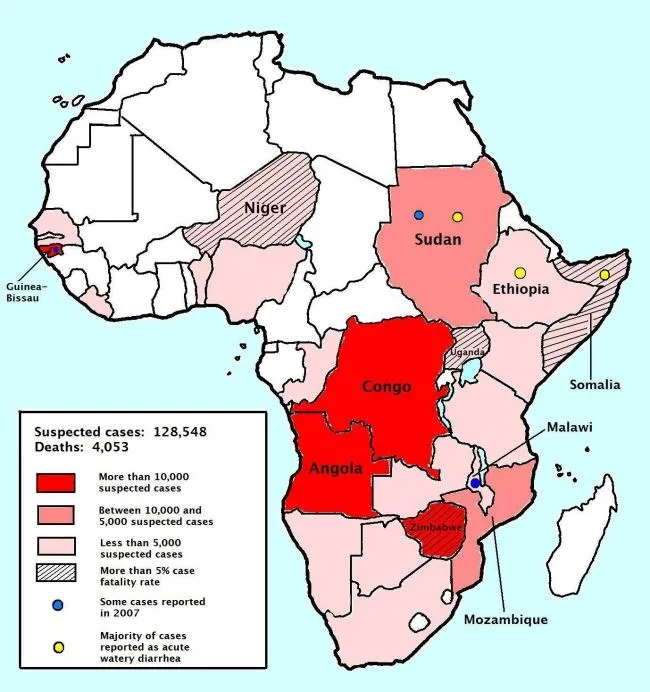
Cholera had disappeared from the Americas for most of the 20th century, but it reappeared toward the end of that century, beginning with a severe outbreak in Peru. This was followed by the 2010s Haiti cholera outbreak and another outbreak of cholera in Haiti amid the 2018–2023 Haitian crisis. As of August 2021 the disease is endemic in Africa and some areas of eastern and western Asia (Bangladesh, India and Yemen). Cholera is not endemic in Europe; all reported cases had a travel history to endemic areas.
History of outbreaks
The word cholera is from Greek: χολέρα kholera from χολή kholē "bile". Cholera likely has its origins in the Indian subcontinent as evidenced by its prevalence in the region for centuries.
References to cholera appear in the European literature as early as 1642, from the Dutch physician Jakob de Bondt's description in his De Medicina Indorum. (The "Indorum" of the title refers to the East Indies. He also gave first European descriptions of other diseases.) But at the time, the word "cholera" was historically used by European physicians to refer to any gastrointestinal upset resulting in yellow diarrhea. De Bondt thus used a common word already in regular use to describe the new disease. This was a frequent practice of the time. It was not until the 1830s that the name for severe yellow diarrhea changed in English from "cholera" to "cholera morbus" to differentiate it from what was then known as "Asiatic cholera", or that associated with origins in India and the East.
Early outbreaks in the Indian subcontinent are believed to have been the result of crowded, poor living conditions, as well as the presence of pools of still water, both of which provide ideal conditions for cholera to thrive. The disease first spread by travelers along trade routes (land and sea) to Russia in 1817, later to the rest of Europe, and from Europe to North America and the rest of the world, (hence the name "Asiatic cholera"). Seven cholera pandemics have occurred since the early 19th century; the first one did not reach the Americas. The seventh pandemic originated in Indonesia in 1961.
The first cholera pandemic occurred in the Bengal region of India, near Calcutta starting in 1817 through 1824. The disease dispersed from India to Southeast Asia, the Middle East, Europe, and Eastern Africa. The movement of British Army and Navy ships and personnel is believed to have contributed to the range of the pandemic, since the ships carried people with the disease to the shores of the Indian Ocean, from Africa to Indonesia, and north to China and Japan.
The second pandemic lasted from 1826 to 1837 and particularly affected North America and Europe. Advancements in transport and global trade, and increased human migration, including soldiers, meant that more people were carrying the disease more widely.
The third pandemic erupted in 1846, persisted until 1860, extended to North Africa, and reached North and South America. It was introduced to North America at Quebec, Canada, via Irish immigrants from the Great Famine. In this pandemic, Brazil was affected for the first time.
The fourth pandemic lasted from 1863 to 1875, spreading from India to Naples and Spain, and reaching the United States at New Orleans, Louisiana in 1873. It spread throughout the Mississippi River system on the continent.
The fifth pandemic was from 1881 to 1896. It started in India and spread to Europe, Asia, and South America. The sixth pandemic ran from 1899 to 1923. These epidemics had a lower number of fatalities because physicians and researchers had a greater understanding of the cholera bacteria. Egypt, the Arabian peninsula, Persia, India, and the Philippines were hit hardest during these epidemics. Other areas, such as Germany in 1892 (primarily the city of Hamburg, where more than 8,600 people died) and Naples from 1910 to 1911, also had severe outbreaks.
The seventh pandemic originated in 1961 in Indonesia and is marked by the emergence of a new strain, nicknamed El Tor, which still persists (as of 2018) in developing countries. This pandemic had initially subsided about 1975 and was thought to have ended, but, as noted, it has persisted. There were a rise in cases in the 1990s and since.
Cholera became widespread in the 19th century. Since then it has killed tens of millions of people. In Russia alone, between 1847 and 1851, more than one million people died from the disease. It killed 150,000 Americans during the second pandemic. Between 1900 and 1920, perhaps eight million people died of cholera in India. Cholera officially became the first reportable disease in the United States due to the significant effects it had on health. John Snow, in England, in 1854 was the first to identify the importance of contaminated water as its source of transmission. Cholera is now no longer considered a pressing health threat in Europe and North America due to filtering and chlorination of water supplies, but it still strongly affects populations in developing countries.
In the past, vessels flew a yellow quarantine flag if any crew members or passengers had cholera. No one aboard a vessel flying a yellow flag would be allowed ashore for an extended period, typically 30 to 40 days.
Historically many different claimed remedies have existed in folklore. Many of the older remedies were based on the miasma theory, that the disease was transmitted by bad air. Some believed that abdominal chilling made one more susceptible, and flannel and cholera belts were included in army kits. In the 1854–1855 outbreak in Naples, homeopathic camphor was used according to Hahnemann. Dr. Hahnemann laid down three main remedies that would be curative in that disease; in early and simple cases camphor; in later stages with excessive cramping, cuprum or with excessive evacuations and profuse cold sweat, veratrum album. These are the Trio Cholera remedies used by homoeopaths around the world.
T. J. Ritter's Mother's Remedies book lists tomato syrup as a home remedy from northern America. Elecampane was recommended in the United Kingdom, according to William Thomas Fernie. The first effective human vaccine was developed in 1885, and the first effective antibiotic was developed in 1948.
Cholera cases are much less frequent in developed countries where governments have helped to establish water sanitation practices and effective medical treatments. In the 19th century the United States, for example, had a severe cholera problem similar to those in some developing countries. It had three large cholera outbreaks in the 1800s, which can be attributed to Vibrio cholerae's spread through interior waterways such as the Erie Canal and the extensive Mississippi River valley system, as well as the major ports along the Eastern Seaboard and their cities upriver. The island of Manhattan in New York City touches the Atlantic Ocean, where cholera collected from river waters and ship discharges just off the coast. At this time, New York City did not have as effective a sanitation system as it developed in the later 20th century, so cholera spread through the city's water supply.
Cholera morbus is a historical term that was used to refer to gastroenteritis rather than specifically to what is now defined as the disease of cholera.
Research
One of the major contributions to fighting cholera was made by the physician and pioneer medical scientist John Snow (1813–1858), who in 1854 found a link between cholera and contaminated drinking water. Dr. Snow proposed a microbial origin for epidemic cholera in 1849. In his major "state of the art" review of 1855, he proposed a substantially complete and correct model for the cause of the disease. In two pioneering epidemiological field studies, he was able to demonstrate human sewage contamination was the most probable disease vector in two major epidemics in London in 1854. His model was not immediately accepted, but it was increasingly seen as plausible as medical microbiology developed over the next 30 years or so. For his work on cholera, John Snow is often regarded as the "Father of Epidemiology".
The bacterium was isolated in 1854 by Italian anatomist Filippo Pacini, but its exact nature and his results were not widely known. In the same year, the Catalan Joaquim Balcells i Pascual discovered the bacterium. In 1856 António Augusto da Costa Simões and José Ferreira de Macedo Pinto, two Portuguese researchers, are believed to have done the same.
Between the mid-1850s and the 1900s, cities in developed nations made massive investment in clean water supply and well-separated sewage treatment infrastructures. This eliminated the threat of cholera epidemics from the major developed cities in the world. In 1883, Robert Koch identified V. cholerae with a microscope as the bacillus causing the disease.
Hemendra Nath Chatterjee, a Bengali scientist, was the first to formulate and demonstrate the effectiveness of oral rehydration salt (ORS) to treat diarrhea. In his 1953 paper, published in The Lancet, he states that promethazine can stop vomiting during cholera and then oral rehydration is possible. The formulation of the fluid replacement solution was 4 g of sodium chloride, 25 g of glucose and 1000 ml of water.
Indian medical scientist Sambhu Nath De discovered the cholera toxin, the animal model of cholera, and successfully demonstrated the method of transmission of cholera pathogen Vibrio cholerae.
Robert Allan Phillips, working at US Naval Medical Research Unit Two in Southeast Asia, evaluated the pathophysiology of the disease using modern laboratory chemistry techniques. He developed a protocol for rehydration. His research led the Lasker Foundation to award him its prize in 1967.
More recently, in 2002, Alam, et al., studied stool samples from patients at the International Centre for Diarrhoeal Disease in Dhaka, Bangladesh. From the various experiments they conducted, the researchers found a correlation between the passage of V. cholerae through the human digestive system and an increased infectivity state. Furthermore, the researchers found the bacterium creates a hyperinfected state where genes that control biosynthesis of amino acids, iron uptake systems, and formation of periplasmic nitrate reductase complexes were induced just before defecation. These induced characteristics allow the cholera vibrios to survive in the "rice water" stools, an environment of limited oxygen and iron, of patients with a cholera infection.
Global Strategy
In 2017, the WHO launched the "Ending Cholera: a global roadmap to 2030" strategy which aims to reduce cholera deaths by 90% by 2030. The strategy was developed by the Global Task Force on Cholera Control (GTFCC) which develops country-specific plans and monitors progress. The approach to achieve this goal combines surveillance, water sanitation, rehydration treatment and oral vaccines. Specifically, the control strategy focuses on three approaches: i) early detection and response to outbreaks to contain outbreaks, ii) stopping cholera transmission through improved sanitation and vaccines in hotspots, and iii) a global framework for cholera control through the GTFCC.
The WHO and the GTFCC do not consider global cholera eradication a viable goal. Even though humans are the only host of cholera, the bacterium can persist in the environment without a human host. While global eradication is not possible, elimination of human to human transmission may be possible. Local elimination is possible, which has been underway most recently during the 2010s Haiti cholera outbreak. Haiti aims to achieve certification of elimination by 2022.
The GTFCC targets 47 countries, 13 of which have established vaccination campaigns.
Source: Wikipedia, The Free Encyclopedia · CC BY-SA 4.0
References
- Cholera — MedlinePlus, U.S. National Library of MedicineSource: MedlinePlus, National Library of Medicine Public domain (U.S. government work). Retrieved 2026-10-19.
- Cholera — Wikipedia, The Free EncyclopediaText from the Wikipedia article "Cholera" (CC BY-SA 4.0); excerpted. Licence. Retrieved 2026-10-19. Revision used.
Text above is quoted from the listed sources without changes to its meaning. Image credits and licences are shown with each image. Educational information only, not medical advice.
Related conditions
Educational overview, not medical advice. Treatment varies by person and location. Consult a qualified health professional for diagnosis or care. Content and model notes · Privacy information